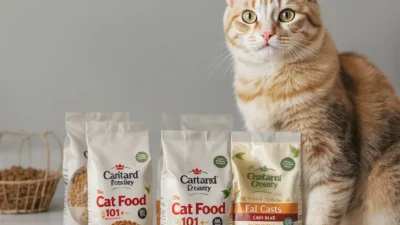
Is your cat’s expensive food really that much better than the store brand? Standing in the pet food aisle, you’re faced with a dizzying array of bags and cans, each promising optimal health, shiny coats, and boundless energy—all at wildly different prices. The marketing noise is overwhelming, making it feel impossible to know if you’re paying for superior nutrition or just a fancy label. The good news is you don’t need a degree in animal nutrition to cut through the clutter. By learning to quickly compare a few key sections on the label, grounded in simple nutritional science, you can confidently decide between store brand and premium cat food based on facts, not fear or fancy packaging. This guide will give you that fast, practical filter.
The best way to compare store brand and premium cat food is to ignore the marketing and focus on three label sections: the guaranteed analysis for core nutrients, the ingredient list for protein source quality, and the AAFCO statement for nutritional completeness. Start by checking if both meet the same AAFCO life stage profile, then compare the protein and fat percentages.
The Label Science: What Actually Matters for Your Cat
Forget the flashy bags and celebrity endorsements. The real story of any cat food is told in three specific places on its label. Understanding these turns a confusing cat food brand comparison into a simple fact-check. Let’s break them down.
Photo by Lucas Pezeta on Pexels
1. The Guaranteed Analysis: The Nutrient Numbers
This is your nutritional scorecard. It lists the minimum percentages of crude protein and fat, and the maximum percentages of fiber and moisture. For a quick compare cat food labels session, focus on protein and fat. Cats are obligate carnivores, so a higher protein percentage from animal sources is typically a good sign. Don’t get lost in decimals; look for meaningful differences (e.g., 30% vs. 40% protein).
2. The Ingredient List: Quality of the Sources
Ingredients are listed by weight before cooking. The first three to five ingredients make up the bulk of the food. Look for a named animal protein (like “chicken,” “salmon,” or “chicken meal”) at the very top. “Meal” is just concentrated, dehydrated meat and is a quality source. The term “premium,” however, is a marketing term, not a regulated standard regulated pet food.
3. The AAFCO Statement: The Completeness Check
This is the most critical line for nutritional adequacy. It states the food is formulated to meet the nutritional levels established by the AAFCO (Association of American Feed Control Officials) for a specific life stage, like “growth” or “adult maintenance.” If a food lacks this statement, it’s not considered complete and balanced. Your first filter in any store brand vs premium cat food comparison should be to ensure both meet the same AAFCO profile for your cat’s life stage.
Your 60-Second Comparison Filter
Now, let’s apply that science. Next time you’re in the aisle, physically (or mentally) put two bags side-by-side. Follow this three-step filter to cut through the noise.
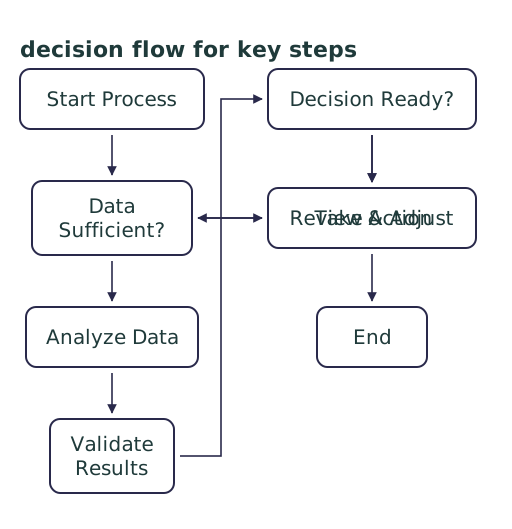
Step 1: Match the AAFCO Statements
Find the AAFCO statement, usually near the bottom of the nutritional adequacy panel. Do both foods claim to be complete and balanced for the same life stage (e.g., “for adult maintenance”)? If yes, proceed. If not, the one lacking it is instantly disqualified for a primary diet. This is the non-negotiable foundation of comparing cat food quality.
Step 2: Compare Protein & Fat Percentages
Glance at the Guaranteed Analysis. For most healthy adult cats, you’ll want to see protein ideally above 30% and fat in a moderate range (10-20%). Compare the two numbers directly. Is the premium brand’s protein 5% higher? That might be meaningful. Is it only 1-2% different? That’s likely negligible.
Step 3: Scan the First 3 Ingredients
Look at the ingredient lists. Is a specific meat or meat meal the first ingredient in both? What’s in the #2 and #3 spots? If a store brand lists “chicken, chicken by-product meal, rice” and a premium brand lists “deboned chicken, chicken meal, peas,” the protein source quality is quite similar. This fast scan completes your cat food brand comparison.
When the Premium Price Might Be Worth It
Our filter shows many store brands hold their own. But there are specific scenarios where the investment in a premium label could be justified, based on what you now know to look for.
For Specialized Health Needs
If your cat has a veterinarian-diagnosed issue like food allergies, kidney disease, or urinary crystals, a therapeutic diet is often necessary. These are usually only available through premium veterinary or prescription lines and are formulated with very specific nutrient profiles you can’t find in a standard grocery store brand.
Seeking Ultra-High Protein or Unique Proteins
If you’re aiming for a very high-protein diet (say, over 40% protein), you’ll typically find those options in the premium tier. The same goes if your cat needs a novel protein like duck, rabbit, or venison due to sensitivities. Store brands usually stick to common proteins like chicken, fish, and beef.
Ingredient Sensitivity & Simplicity
Some cats react to common fillers or additives. If you’re evaluating cat food nutrition for a sensitive cat, a premium brand with a shorter, simpler ingredient list (e.g., single protein, limited carbs) might be worth the cost to avoid digestive upset or skin issues.
Shop with Confidence, Not Guesswork
The power has shifted from the marketer to you. You no longer have to wonder if a shiny bag is “worth it.” By using the 60-second filter—check the AAFCO statement, compare the protein numbers, and scan the top ingredients—you can make a choice grounded in your cat’s needs, not in fancy packaging. Both private label and name brand cat food can be excellent choices if they pass your label check.
On your next trip to the store, try it. Pull two cans off the shelf—one store brand, one premium—and run them through your new filter. You might be surprised by what you find, and you’ll definitely leave with more confidence in your cart.
Q: Is store brand cat food made by the same companies as premium brands?
A: Often, yes. Large pet food manufacturers frequently produce formulas for both their own name brands and for retailers to sell as store brands. The recipes are different, but they come from the same factories with the same safety standards. This is why checking the label, not the maker, is key.
Q: What does ‘by-products’ mean in the ingredients, and should I avoid it?
A: By-products are non-rendered, clean parts of an animal other than meat (like liver, heart, lungs). They are nutrient-dense and provide vitamins and minerals cats would eat in the wild. They are not “fillers” and are considered a quality ingredient by nutritionists. There’s no need to avoid them unless your cat has a specific sensitivity.
Q: My cat is a picky eater. Will store brand food be less palatable?
A: Not necessarily. Palatability is driven by fat content, protein quality, and often specific flavor enhancers applied to the kibble (called “digest”). Both store and premium brands use these techniques. The best test is a small bag or can to see if your cat approves.
Q: Are grain-free or exotic protein sources worth the premium price?
A: Only if there’s a medical reason. Most cats digest grains like rice or corn perfectly well. Grain-free diets are not inherently healthier and have been linked to concerns in some studies. Exotic proteins (duck, kangaroo) are primarily useful for cats with diagnosed allergies to common proteins like chicken or beef.