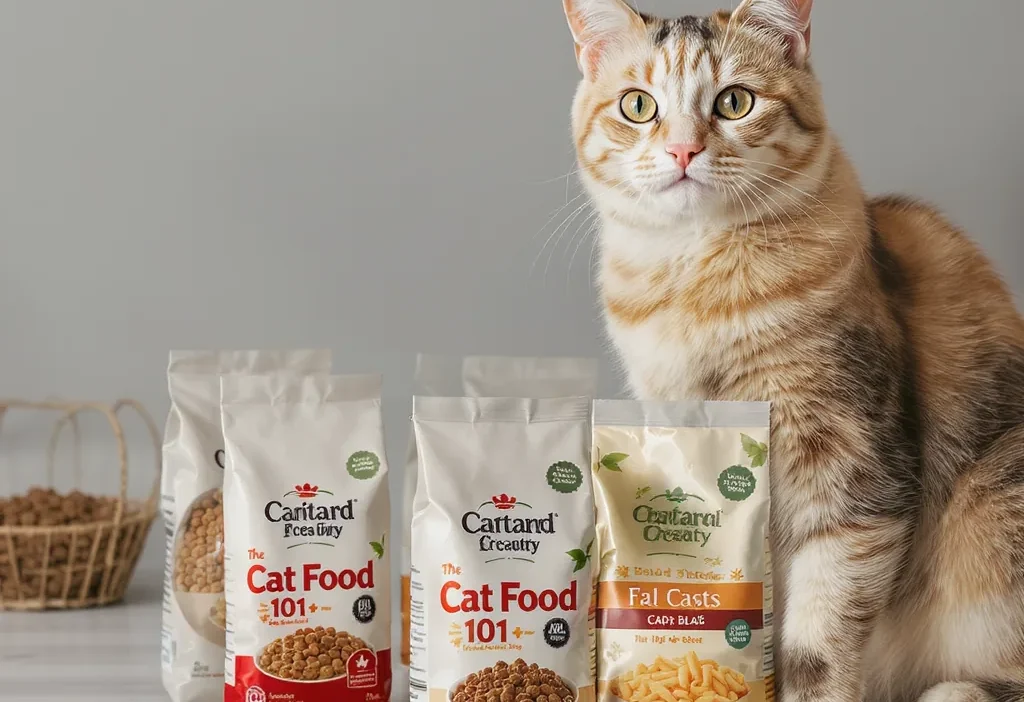
Staring at a wall of cat food bags can feel less like shopping and more like trying to decipher an ancient, jargon-filled scroll. Between the bold promises of “natural,” “grain-free,” or “premium” and the tiny-print tables of percentages and chemical-sounding ingredients, it’s easy to feel paralyzed. You want to make the best choice for your cat’s health, but the label itself seems designed to confuse rather than clarify. The good news is that learning how to read cat food labels isn’t about becoming a feline nutrition scientist—it’s about learning to decode a map. This guide will empower you to cut through the marketing hype, understand the regulated facts, and use that information to confidently filter your options, transforming that confusing wall into a clear pathway to a better-informed decision.
Here’s how to read a cat food label effectively. Start by understanding the three key areas: the front-panel marketing claims, which are regulated but can be misleading; the guaranteed analysis, which provides minimums and maximums for key nutrients; and the ingredients list, which is ordered by weight. Your goal isn’t to find a perfect label, but to use these tools to filter out poor options and match a food to your cat’s specific life stage and health needs.
The Three Pillars of a Cat Food Label
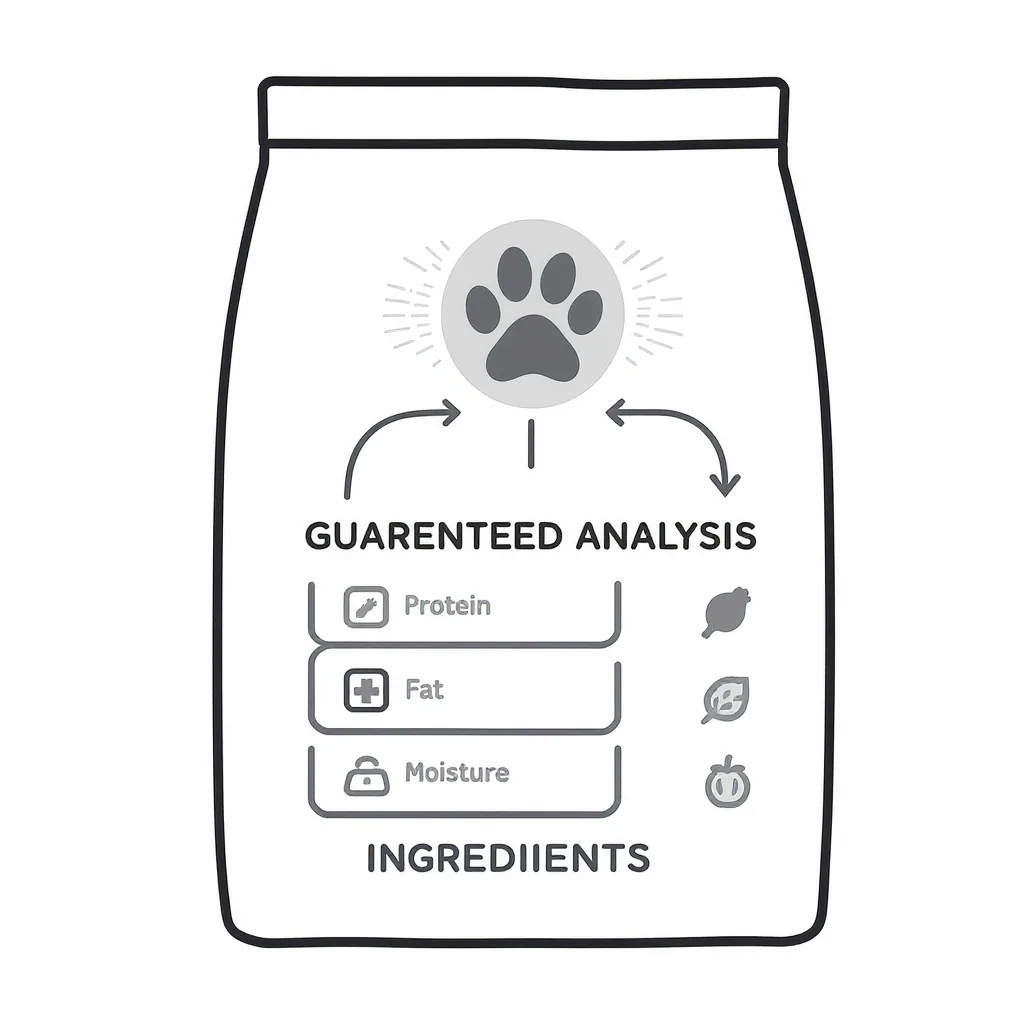
Think of a cat food label not as a single document, but as three interconnected information panels that work together. To truly understand what you’re buying, you need to cross-reference all three. They are: the front-panel marketing claims, the guaranteed analysis table, and the ingredients list. Mastering how to read cat food labels means learning the language and limitations of each area.
In the United States, pet food labeling is primarily regulated by the FDA and the Association of American Feed Control Officials (AAFCO). AAFCO doesn’t approve foods, but it sets the nutritional standards and labeling guidelines that most states adopt. Your goal isn’t to find a mythical “perfect” label, but to use these three pillars as a decision-making tool. You’ll start with the flashy claims on the front, use the guaranteed analysis to compare hard numbers, and then investigate the ingredients list for quality and sourcing. This approach helps you filter out poor options and zero in on foods that match your cat’s specific life stage and health needs.
Decoding Front-Panel Claims & Marketing Hype

Photo by Vadim B on Pexels
The front of the bag is designed to sell. While many claims are regulated, their intent is to catch your eye, not necessarily to provide complete transparency. Learning to decode cat food label claims is your first filter against marketing hype.
The “95%”, “With”, and “Flavor Of” Rules
These AAFCO rules govern how ingredients can be featured in a product name. A food named “Salmon Cat Food” must contain at least 95% salmon (not counting water for processing). A food named “Cat Food with Salmon” need only contain 3% salmon. A “Salmon Flavor Cat Food” simply needs to contain enough salmon to be detectable—often just a trace amount for taste. This is a classic example of why you must look beyond the name.
Common Claims and What They (Really) Mean
“Natural”: This means the product contains no chemically synthesized ingredients, with a few exceptions for vitamins and minerals. It says nothing about the nutritional adequacy, sourcing, or quality of those natural ingredients.
“Grain-Free”: This means the formula uses alternative carbohydrate sources like potatoes, peas, or lentils instead of corn, wheat, or rice. It’s a dietary formulation choice, not an automatic indicator of higher quality or suitability for every cat. Some cats do well on grain-free diets, while others may thrive on diets containing grains.
“Human-Grade”: This is a strict claim meaning every ingredient and the finished product are edible and regulated for human consumption. It’s rare and expensive. Most pet food is “feed-grade,” which follows different regulatory pathways but can still be excellent nutrition.
Claims like “premium,” “ultra-premium,” or “holistic” have no legal definition in pet food and are purely marketing terms. Always verify their meaning by checking the other two pillars of the label.
Understanding the Guaranteed Analysis (It’s Not Nutrition Facts)
This is the small table, usually on the side or back, listing minimums and maximums for key nutrients. A proper cat food guaranteed analysis explained must start with a crucial warning: these percentages are listed on an “as-fed” basis, which includes the moisture in the food. This makes comparing a wet food to a dry food—or even two wet foods with different moisture levels—impossible without a simple conversion.
The term “crude” refers to the method of measurement in a lab, not the quality. “Crude protein” measures nitrogen content, “crude fat” measures extractable fats, and “crude fiber” measures indigestible plant matter.
The Essential Skill: Dry Matter Basis Conversion
To compare foods fairly, you need to strip out the water and look at the nutrients in the dry matter. Here’s the simple math:
- Find the moisture percentage in the Guaranteed Analysis (e.g., 78% for wet food, 10% for dry).
- Subtract that from 100% to get the Dry Matter percentage (e.g., 100% – 78% = 22% DM).
- Take the “as-fed” nutrient percentage (e.g., 12% protein) and divide it by the Dry Matter percentage (0.22).
- Multiply by 100. (12 ÷ 0.22 = 54.5%). The dry matter protein is 54.5%.
This table shows why this calculation is non-negotiable for an accurate comparison:
| Nutrient | Premium Pate (Wet) | Kibble Choice (Dry) |
|---|---|---|
| Moisture (max) | 78% | 10% |
| Protein (min) – As-Fed | 12% | 32% |
| Fat (min) – As-Fed | 5% | 15% |
| Protein – Dry Matter Basis | 54.5% | 35.6% |
| Fat – Dry Matter Basis | 22.7% | 16.7% |
Suddenly, the wet food, which looked low in protein, is actually far more protein-dense than the dry food when water is removed. The guaranteed analysis tells you “how much” of key nutrients are present; the ingredients list, which we’ll explore next, tells you “what kind” they are.
Reading the Ingredients List: Beyond the First Item
Ingredients are listed in descending order by weight, including their moisture content. This is why fresh chicken, which is about 70% water, often appears first in wet foods, while chicken meal, which is concentrated and dry, appears first in many dry foods. Decoding cat food ingredients requires looking at the whole picture, not just the top entry.
Ingredient Splitting & The Power of “Meal”
Be aware of “ingredient splitting,” where a manufacturer uses different forms of the same ingredient to lower a less-desirable item on the list. For example, “peas, pea protein, pea flour” could collectively outweigh the meat source, even though individually they appear lower.
Contrary to some myths, “chicken meal” or “salmon meal” are not low-quality ingredients. They are rendered, dried chicken or salmon with fat and water removed, creating a highly concentrated protein source. A food with “chicken meal” as the first ingredient often delivers more actual chicken protein than a food where “chicken” is first but mostly water weight.
By-Products, Carbs, and Completeness
By-products: These are non-rendered, clean parts other than meat (like liver, heart, lungs). They are nutrient-dense and biologically appropriate for cats. The concern isn’t their inclusion, but the quality control of their source. A named by-product (e.g., “chicken by-products”) is typically preferable to a generic “meat by-products.”
Carbohydrate Sources: Cats have no nutritional requirement for carbs, but they provide energy and help form kibble. Look for whole, identifiable sources (brown rice, sweet potato) rather than a long list of refined starches and sugars.
Finally, a long list of vitamins, minerals, and amino acids (like taurine) is a good sign—it indicates the food is formulated to be nutritionally complete and balanced, which is a fundamental requirement backed by AAFCO feeding trials.
Common Label Pitfalls & How to Avoid Them
Even armed with knowledge, it’s easy to stumble. Here are the most common mistakes in interpreting pet food labels and how to steer clear.
Pitfall: Choosing a food solely because the first ingredient is a specific meat.
Why it’s a mistake: You’re not accounting for moisture weight or ingredient splitting. “Chicken” as a first ingredient in wet food may contribute less protein than “chicken meal” as a third ingredient in dry food.
What to do instead: Use the dry matter basis calculation to compare protein content, and then scan the entire ingredients list to see what the primary protein sources truly are.
Pitfall: Comparing the guaranteed analysis of wet and dry food at face value.
Why it’s a mistake: Moisture wildly skews the percentages, making wet food look nutrient-poor.
What to do instead: Always convert to dry matter basis for any meaningful comparison, especially across different formats.
Pitfall: Being swayed by “premium” or “grain-free” branding without checking the details.
Why it’s a mistake: These are marketing terms, not guarantees of quality or suitability. A “premium” food might use vague ingredients, and a “grain-free” food might be loaded with other high-carb fillers like potatoes.
What to do instead: Let the guaranteed analysis and ingredients list be your quality guides. Ignore the marketing adjectives and focus on the regulated data.
Pitfall: Misunderstanding the AAFCO statement.
Why it’s a mistake: The statement “formulated to meet the nutritional levels established by the AAFCO Cat Food Nutrient Profiles” means the recipe was designed on paper to hit targets. The superior statement is “Animal feeding tests using AAFCO procedures substantiate that this product provides complete and balanced nutrition,” which means it was actually fed to cats and proven adequate.
What to do instead: Look for the AAFCO statement (usually near the guaranteed analysis) and prefer foods that have undergone feeding trials, especially for life stages like “growth” (kittens) or “all life stages.”
Your Newfound Confidence at the Pet Store
Understanding how to read cat food labels transforms a confusing wall of options into a manageable set of informed choices. You now have the tools to see past the marketing, make fair comparisons between foods, and ask better questions. Remember, the goal isn’t to find a single “best” food, but to identify several good options that fit your cat’s needs and your budget, and then to observe how your cat thrives on them.
Use this knowledge as a preventive measure—a way to filter out genuinely poor formulations and feel confident in the nutritional foundation you’re providing. Take this framework with you, discuss your findings with your veterinarian, and know that you’re making a significant, positive step toward supporting your cat’s long-term health through informed nutrition.
Decoding a cat food label relies on three interconnected pillars: the regulated but often hyped front-panel claims, the numerical guaranteed analysis, and the quality-revealing ingredients list. Your most powerful takeaway is learning to convert the guaranteed analysis to a dry matter basis to compare protein and fat levels accurately between wet and dry foods. Use this skill to narrow your choices, then examine the ingredients for specific, named protein sources and overall completeness. This process empowers you to make a confident, evidence-based choice for your cat’s diet.
Q: What does the AAFCO statement actually mean for my cat?
A: The AAFCO statement confirms the food is nutritionally complete for a specific life stage (e.g., adult maintenance, growth). The best statement indicates the food passed “animal feeding tests,” meaning it was proven in real cats. A “formulated” statement means it was designed to meet nutrient profiles on paper. Always ensure the food matches your cat’s life stage.
Q: Is a ‘by-product’ in cat food bad?
A: Not inherently. Named by-products (e.g., chicken by-products) are organ meats and parts that are highly nutritious and biologically appropriate for cats. The quality depends on the supplier. They are a source of essential nutrients that muscle meat alone doesn’t provide in sufficient quantities.
Q: How important is the order of ingredients?
A: It’s important as a starting point, but not the whole story. Ingredients are listed by pre-cooked weight, so high-moisture items (like fresh chicken) appear heavier. You must consider this and look for quality protein sources (whole meats or named meals) within the first several ingredients to understand the formula’s primary focus.
Q: Should I avoid cat foods with grains?
A: Not necessarily. Many cats digest grains like rice or oats perfectly well. Grains can provide energy and essential nutrients. Avoid grains only if your cat has a diagnosed allergy or intolerance. The focus should be on the overall quality and digestibility of the ingredients, not the presence or absence of a single category.
Q: Can I trust ‘veterinarian recommended’ claims?
A: Be cautious. This claim is often based on a survey of a small number of vets or is used by brands owned by large pet care corporations that also employ vets. It’s a marketing claim, not a guarantee of superiority. Your own veterinarian’s personalized recommendation for your specific cat will always be more valuable.