You’ve likely stood in your kitchen, cat food bag in hand, squinting at the tiny feeding chart and wondering, “Is this *really* the right amount for my cat?” Here’s the counterintuitive truth: that chart is not a precise prescription for your unique feline. It’s a broad, one-size-fits-most starting point built on several hidden assumptions about an “average” cat. While it provides a crucial baseline, blindly following it can lead to an underfed, energetic kitten or an overfed, sedentary senior. Understanding what those cat food bag feeding guidelines assume—and more importantly, how to adjust them—is the first step to becoming your cat’s best nutritionist.
Cat food bag feeding charts are a general guideline, not a strict rule. They assume your cat is an average, healthy, adult indoor cat with moderate activity. To get the right portion, you’ll need to adjust for your individual cat’s age, lifestyle, and body condition. This article will explain the common assumptions behind the chart and give you a clear, practical method to personalize your cat’s meals.
The Three Big Assumptions Your Cat Food Bag Makes
That feeding guide on cat food bag looks so official, but it’s built on a few broad generalizations. Understanding these hidden assumptions is the first step to personalizing your cat’s diet.
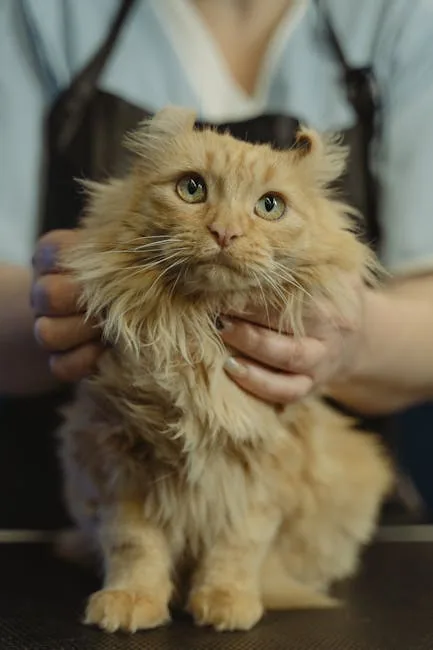
Photo by Tima Miroshnichenko on Pexels
1. The “Average Cat” Myth
The chart assumes your cat’s weight is a perfect indicator of its calorie needs. But a 12-pound cat can be a lean, muscular athlete or a couch potato with a higher body fat percentage. The chart doesn’t account for body condition, only the number on the scale.
2. The “Moderate Activity” Fallacy
What does “moderate activity” even mean? For the bag, it’s a vague middle ground. Is your cat a window-watcher or a dawn zoomies champion? Does it have outdoor access? The chart’s single activity level can’t capture this range, leading to significant over- or under-feeding.
3. The “One-Life-Stage-Fits-All” Oversight
Most charts are calibrated for a generic, healthy adult cat. They often don’t provide separate, clear guidance for the vastly different needs of kittens, seniors, or neutered/spayed cats, whose metabolisms can be up to 30% slower. Applying an adult portion to these life stages is a common mistake.
The Science of Calories: What the Chart Doesn’t Show You
At its core, the cat food bag feeding chart explained is a simple translation tool. It converts your cat’s weight into a volume of food (cups) based on the calorie density (kcal/cup) of that specific formula. The chart’s goal is to meet your cat’s Resting Energy Requirement (RER)—the calories needed for basic bodily functions at rest—plus a little extra for activity.
Think of RER as your cat’s idle calorie burn. This is why a 10-pound senior cat needs fewer calories than a 10-pound young, active cat, even though the chart might recommend the same amount. The chart uses an “average” activity multiplier, which is where the personalization gap appears. Your job isn’t to blindly fill a cup, but to match calories to your individual cat’s true needs, which involves understanding some basic feline nutrition principles.
How to Adjust: Your 4-Point Personalization Checklist
Now for the practical part: adjusting cat food portions. Use the bag’s chart as your baseline, then modify it using this checklist. Your cat’s body will give you the final answer.
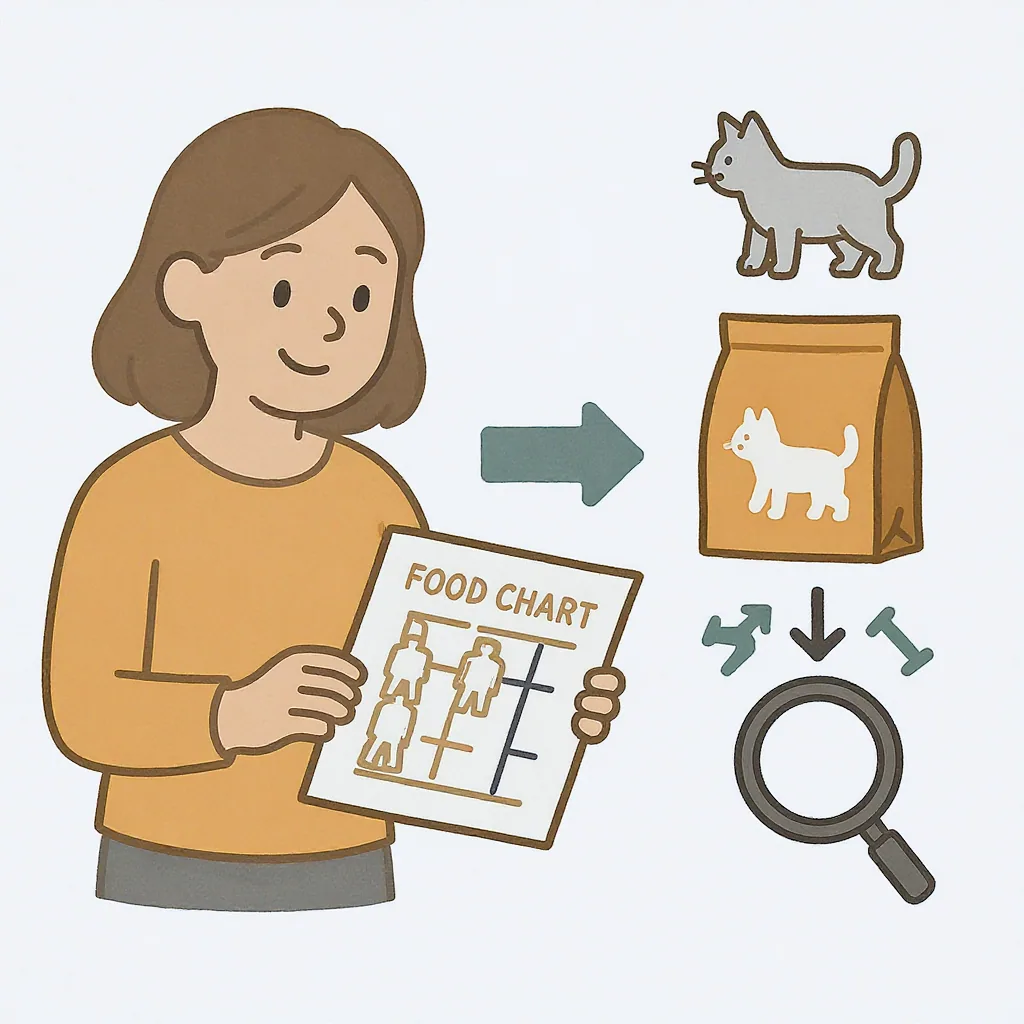
1. Assess Body Condition Score (BCS)
This is your most important tool. Look and feel: Can you easily feel your cat’s ribs with a slight fat covering? Is there a visible waist when viewed from above? If your cat is overweight (ribs hard to feel, no waist), start with 10-20% less than the chart. If underweight (ribs very prominent), add 10-20% more.
2. Factor in Life Stage & Neutering
Kittens need more food per pound than adults. Seniors and neutered/spayed cats often need less. If the bag doesn’t have a specific life-stage guide, use the adult portion as a start and adjust based on BCS and activity. A neutered indoor cat will almost always need less than the “moderate activity” adult portion suggests.
3. Consider Activity Level Honestly
Be realistic. A cat that sleeps 18 hours a day is “low activity.” One that has vigorous play sessions twice daily is “high activity.” Adjust the baseline portion down for the former and up for the latter. This is often the biggest correction needed from the cat food feeding guidelines.
4. Monitor and Tweak
Weigh your cat monthly if possible. More importantly, reassess their BCS every few weeks. Adjust the portion in small increments (e.g., 1/8 of a cup) and give it 2-3 weeks to see the effect. Customizing your cat’s diet is a gradual process.
Signs You’ve Got the Portion Right (or Wrong)
How do you know your adjustments are working? Look for these clear signals.
Signs the Portion is Right:
- Consistent Weight: Your cat maintains a stable, healthy weight.
- Good Energy: They are playful and alert, not lethargic.
- Healthy Coat: Their fur is shiny and not brittle.
- Normal Eating Behavior: They eat their meals without frantic begging or leaving large amounts.
Red Flags to Re-evaluate:
- Steady Weight Gain/Loss: This is the clearest sign the calorie balance is off.
- Constant Begging or Food Obsession: Could mean they’re genuinely hungry (underfed) or just bored (overfed but seeking stimulation).
- Lethargy or Low Energy: Could indicate underfeeding or an underlying health issue.
- Ribs Become Too Prominent or Disappear: Your visual and tactile BCS check is failing.
If your cat is gaining weight despite following the chart, the ‘moderate activity’ assumption was wrong for them. This ongoing observation is how you become an expert in your own cat’s needs.
Your Cat’s Diet, Personalized
The feeding chart on the bag is a useful starting point, not a final commandment. By understanding its assumptions and learning to read your cat’s own signals—their body condition, energy, and overall well-being—you move from following a generic rule to providing truly personalized care. This proactive approach helps prevent weight-related health issues before they start. Trust your observations, make small adjustments, and remember that finding the perfect balance is a journey you and your cat take together.