If you’re shopping for cat food to manage a sensitive stomach or itchy skin, you’ve likely encountered the terms “novel protein” and “limited ingredient diet.” They sound like straightforward solutions, but here’s the counterintuitive truth: “novel” doesn’t mean new to science, and “limited ingredient” isn’t a universal guarantee of simplicity. These are specific, strategic terms used in veterinary nutrition, and understanding their plain meaning is the first step to cutting through marketing hype and making an informed choice for your cat. This guide will decode what “novel protein cat food” really means, explain the purpose of a limited ingredient diet, and clarify the crucial difference between them so you can read labels with confidence.
Here’s how to understand novel protein and limited ingredient cat food in plain terms. A novel protein is simply a protein source your cat has likely never eaten before, like rabbit or duck, used to avoid allergic reactions. A limited ingredient diet (LID) is a food formulated with a minimal number of components, often one protein and one carb, to simplify the diet and help identify food triggers. They are related but distinct strategies for managing food sensitivities.
Myth vs. Fact: What ‘Novel Protein’ Really Means
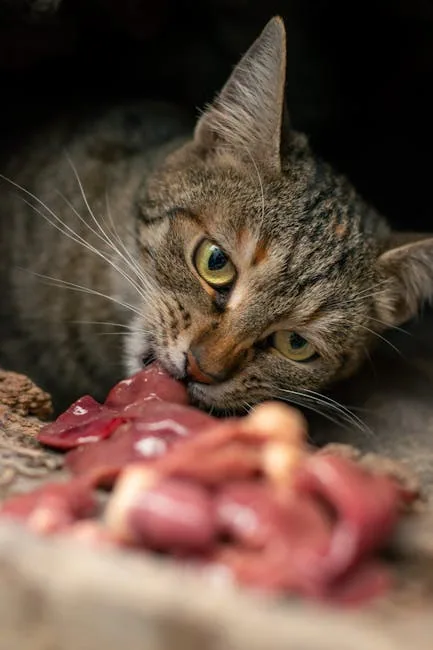
Photo by Bekir Umut Vural on Pexels
Let’s clear up the biggest misconception first. In pet food, “novel” doesn’t mean “newly invented” or “scientifically advanced.” The novel protein cat food meaning is much simpler: it’s a protein source that is new to your specific cat’s diet. The entire strategy is built on the idea of avoiding ingredients your cat may have already developed a sensitivity to through repeated exposure.
Think of it this way: if your cat has eaten chicken-based food for years, their immune system has had countless opportunities to potentially identify chicken protein as a threat. A novel protein diet switches to a source they’ve likely never encountered, like rabbit, venison, duck, or even kangaroo. This lack of prior exposure means their system hasn’t had a chance to mount a defensive reaction against it, which can help manage symptoms of a suspected food allergy.
It’s crucial to understand that “novel” is relative. For a cat who has only ever eaten fish and chicken, beef could be a novel protein. However, since beef is a common allergen, vets often recommend more exotic sources. The goal is to bypass the usual suspects—chicken, beef, dairy, and fish—which account for the majority of feline food reactions common feline allergens.
Limited Ingredient Diets: Simplicity as a Strategy
While a novel protein diet focuses on the type of protein, a limited ingredient diet focuses on the number of components. The limited ingredient cat food meaning centers on simplification: these foods are formulated with a minimal list of ingredients, often just one protein source, one carbohydrate source, and the necessary vitamins and fats.
This is a key distinction. A LID is not inherently hypoallergenic or novel. Its purpose is to reduce the total variables in your cat’s bowl, making it dramatically easier to identify what might be causing an issue. If your cat is on a food with 40 ingredients and has a reaction, pinpointing the culprit is like finding a needle in a haystack. A LID with 10 ingredients shrinks the haystack.
Therefore, a single protein cat food is a common feature of LIDs, but that single protein could be a common one like chicken. For a cat allergic to chicken, a chicken-based LID would be problematic. The “limited” part refers to the ingredient count, not the novelty of the components. It’s a tool for elimination and identification, often used in conjunction with a novel protein.
The Key Difference (And Why It Matters for Your Cat)
These two concepts are related tools in the same toolbox, but they are not the same tool. Confusing them can lead to choosing a food that doesn’t address your cat’s needs.
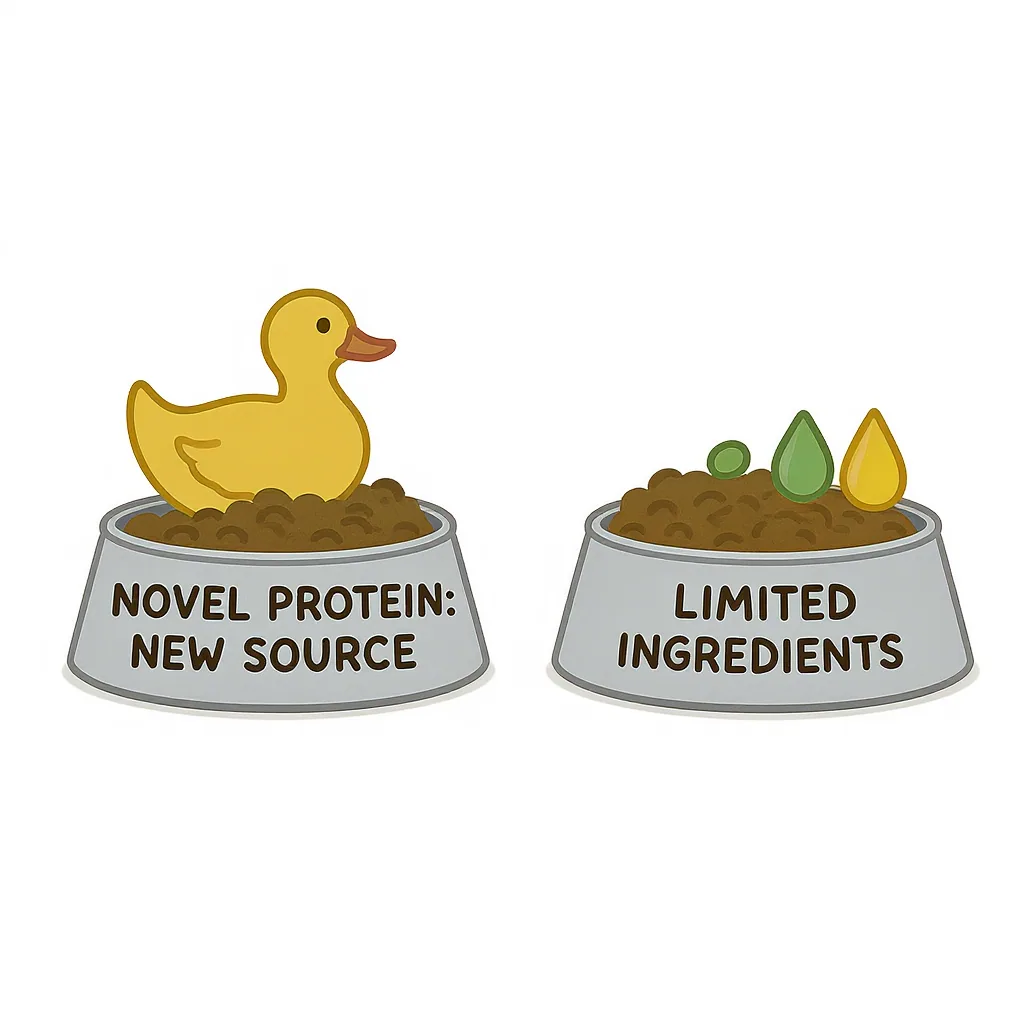
Here’s a practical scenario: Your cat is scratching excessively, and your vet suspects a food allergy, possibly to chicken.
- A Novel Protein Diet solves this by offering a protein your cat hasn’t eaten, like duck. It may still have a long list of other ingredients.
- A Limited Ingredient Diet solves this by offering very few total ingredients. If it’s also a novel protein LID (e.g., duck and pea only), it hits both goals.
- A Limited Ingredient Diet that uses chicken as its single protein would not help, as it contains the suspected trigger.
The core difference is this: Novel = new source. Limited = few components. For managing sensitivities, the most effective approach is often a diet that is both—a limited ingredient formula featuring a novel protein.
Your Practical Filter for Shopping & Labels
Marketing can be vague, but the ingredient panel doesn’t lie. Turn these definitions into a simple mental checklist when you’re evaluating a food.
1. Identify the Primary Protein: Look at the first ingredient. Is it a protein source your cat has consistently eaten for years? If yes, it’s not novel for them. Remember, “meal” (e.g., “chicken meal”) is still that protein.
2. Count the Total Components: Scan the full list. Is it a short, simple list of recognizable items, or does it include many items, especially multiple named proteins, starches, or “flavors”? A true LID keeps this list short.
3. Hunt for Hidden Triggers: This is critical. Check for broths, “natural flavors,” or digest sprays. A food advertised as “duck” might contain “chicken broth” or “fish oil,” which could reintroduce a common allergen and undermine a novel protein strategy. This step is where many well-intentioned plans fail.
By applying this filter, you move beyond the front-of-bag claim of “novel” or “limited ingredient” and verify what the food actually provides. This empowers you to choose a diet that aligns with your specific goal, whether it’s introducing a truly novel protein or simplifying down to a bare-bones single protein diet for cats.
Decoding the Label is Your First Step
Understanding that “novel” means new-to-your-cat and “limited” means fewer ingredients transforms these terms from marketing buzzwords into practical filters. It allows you to cut through the confusion and assess a food based on what’s actually in it, not just what’s promised on the package.
Armed with these plain-term definitions, your next move is to look at your cat’s current food label and assess it against your goals—whether that’s trying a truly novel protein or seeking a simplified limited ingredient formula. This knowledge is the foundation for a more informed conversation with your veterinarian about the best dietary path forward for your cat’s individual needs.