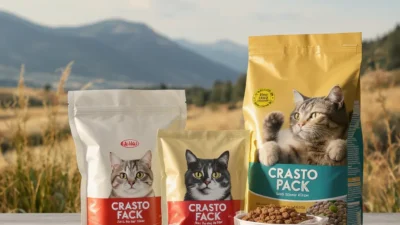
Walk down any pet food aisle, and you’ll be met with a stark choice: the bold, modern packaging of grain-free cat food versus the more traditional formulas that include grains like rice or barley. The marketing message is often clear—one is portrayed as a more natural, superior choice. But here’s the counterintuitive truth for cat owners: the decision between grain-free vs grain cat food is rarely about the grains themselves. It’s a more nuanced calculation involving your cat’s unique health, the overall quality of ingredients, and even your budget. This article cuts through the hype to help you move beyond the label and make a choice grounded in feline nutrition science, not just clever packaging.
The best way to choose between grain-free and grain-inclusive cat food is to look beyond the label hype. Focus on your cat’s specific health profile, the overall quality of ingredients (like named meat proteins), and your budget. For most healthy cats, a high-quality grain-inclusive diet is perfectly suitable, while grain-free may be necessary for specific allergies. Always consult your vet to rule out medical conditions before making a dietary switch.
The Great Grain Debate: Separating Fact from Feline Fiction
Photo by dayong tien on Pexels
Marketing has created a powerful narrative around grains in pet food. To make a truly informed choice, we need to separate the common myths from the nutritional facts.
Myth 1: Grains are just “fillers” with no nutritional value.
Fact: While cats don’t require carbohydrates in large amounts, grains like rice, barley, and oats are not inert space-wasters. They provide digestible energy, essential fatty acids, fiber for digestive health, and vitamins like B vitamins and vitamin E. The term “filler” is more accurately applied to low-quality ingredients of any type, not grains specifically.
Myth 2: All cats are allergic or intolerant to grains.
Fact: True food allergies in cats are relatively rare, and when they do occur, the most common culprits are animal proteins like beef, dairy, and fish—not grains. A diagnosis of a grain allergy should come from a veterinarian, not an assumption based on marketing. For the vast majority of cats, well-cooked grains are perfectly digestible.
Myth 3: Grain-free is always more “natural” or “biologically appropriate.”
Fact: The “natural” label is loosely regulated. A grain-free diet that replaces grains with a high percentage of potatoes, peas, or lentils isn’t necessarily closer to what a cat would eat in the wild. The core of a cat’s natural diet is prey, which is high in protein and moisture and low in carbohydrates, regardless of the carb source. The focus should be on the diet’s overall profile, not this one ingredient category.
What Your Cat Actually Needs: The Core of Feline Nutrition
Cats are obligate carnivores. This biological fact dictates their essential nutritional needs, which should be the primary lens through which you evaluate any food, grain-free or not.
Their diet must be rich in high-quality animal protein to supply amino acids like taurine, which is critical for heart and eye health. They also require specific fats and only a minimal amount of carbohydrates. This is where understanding cats and grains in food becomes practical. Grains are one potential source of those carbohydrates, along with fiber and other nutrients. The key takeaway is that “grain-free” is not synonymous with “low-carb.” Many grain-free diets use alternative carb sources like potatoes, peas, chickpeas, or tapioca, which can sometimes result in a carbohydrate content similar to or even higher than some grain-inclusive foods.
Therefore, when comparing grain inclusive cat food and grain-free options, the more important questions are: What is the primary protein source? Is it a named meat? What is the overall carbohydrate content? The grain binary often distracts from these fundamental aspects of cat nutrition.
Grain-Free vs. With Grains: A Side-by-Side Evaluation
Let’s move beyond the hype and look at a practical, at-a-glance comparison. This table outlines the typical characteristics, uses, and considerations for each diet type to help you weigh the grain-free cat food pros and cons against those of grain-inclusive formulas.
| Consideration | Grain-Free Diet | Grain-Inclusive Diet |
|---|---|---|
| Common Carb Sources | Potatoes, sweet potatoes, peas, lentils, chickpeas, tapioca. | Rice, barley, oats, corn, wheat (often whole or ground). |
| Typical Cost | Often more expensive due to marketing and alternative ingredients. | Often more budget-friendly, especially among high-quality brands. |
| Best For (Ideal Scenarios) | Cats with a veterinary-diagnosed grain allergy or sensitivity. Owners seeking specific ingredient exclusions. | The majority of healthy cats. A cost-effective way to meet nutritional needs with high-quality ingredients. |
| Potential Concerns | May be linked to certain health concerns when legumes/pulses are used heavily legume ingredients; often higher in cost; not necessarily lower in carbs. | Lower-quality foods may use refined grains as a primary cheap filler; some cats may have genuine intolerance (rare). |
How to Make the Right Choice for Your Cat
Your cat is an individual. Instead of asking which diet type is “best,” ask which one is best for your cat. Use this simple filter to guide your decision.
1. What does your veterinarian say?
This is the most critical step. Before making any switch, rule out underlying health issues. Discuss your cat’s specific history, weight, and any symptoms with your vet. They can help determine if a dietary trial for an allergy is even warranted.
2. What is the primary protein source and its quality?
Look for a named animal protein (e.g., chicken, salmon, turkey) as the first ingredient. This is far more important than the presence or absence of grains. High meat content supports your obligate carnivore’s needs.
3. What is your budget for the long term?
Consistency is key in feline diets. Choose a high-quality food you can afford consistently, whether it’s grain-free or includes grains. A premium grain-inclusive diet is typically a better choice than a budget grain-free food full of unnamed meals and starches.
Remember: This guide is for educational purposes to help you have a more informed conversation with your veterinarian, not a substitute for professional medical advice.
Common Pitfalls to Avoid When Choosing Cat Food
Even with the best intentions, it’s easy to stumble. Here are the most frequent mistakes cat owners make when navigating the grain free cat food debate.
Don’t: Switch foods abruptly.
Do: Transition slowly over 7-10 days, mixing increasing amounts of the new food with the old. This prevents gastrointestinal upset.
Don’t: Focus solely on the “grain-free” label.
Do: Read the entire ingredient list. A grain-free food with “poultry by-product meal” and four different starchy legumes is not a higher-quality choice than a grain-inclusive food with “deboned chicken” and brown rice.
Don’t: Self-diagnose a food allergy.
Do: Consult your vet if you suspect an allergy. They will likely recommend a strict elimination diet using a novel protein or hydrolyzed food to accurately identify the trigger, which is rarely grains.
Don’t: Chase trends or marketing buzzwords.
Do: Prioritize proven nutritional science and your cat’s sustained health over the latest packaging claim. A balanced diet from a reputable manufacturer that your cat thrives on is the ultimate goal.
The Final Scoop: It’s About the Big Picture
The choice between grain-free and grain-inclusive cat food isn’t a simple verdict of good versus bad. It’s a tradeoff that hinges on your cat’s unique health profile, the overall quality of the ingredients, and what fits sustainably into your life. For most healthy cats, a high-quality diet that includes digestible grains is a nutritionally complete and often more affordable option.
Ultimately, the “grain-free” label is just one piece of a much larger puzzle. By looking beyond the hype, focusing on high animal protein content, and partnering with your veterinarian, you can move past the binary debate and make a confident, personalized choice that supports your cat’s long-term well-being.
Q: Is grain-free cat food better for all cats?
A: No, grain-free food is not inherently better for all cats. It is a necessary and good choice only for the small minority of cats with a veterinarian-diagnosed grain allergy or sensitivity. For the vast majority of healthy cats, a high-quality grain-inclusive diet is perfectly appropriate and often more cost-effective.
Q: What are common signs of a grain allergy in cats?
A: True food allergy signs are similar regardless of the trigger and primarily affect the skin and digestive system. Look for persistent itching, skin inflammation, hair loss, recurrent ear infections, vomiting, or diarrhea. Importantly, these symptoms are far more commonly caused by environmental allergens or proteins like beef or fish than by grains.
Q: Can grain-inclusive cat food cause diabetes in cats?
A: The development of diabetes in cats is complex and linked to obesity and high carbohydrate intake over time, not specifically to grains. A grain-inclusive diet that is low in overall carbohydrates and helps maintain a healthy weight does not cause diabetes. Conversely, a high-carb grain-free diet could contribute to the same risk. The total carb content and calorie control are what matter most.
Q: Are peas and potatoes in grain-free food better than grains?
A: Not necessarily. Peas, potatoes, lentils, and other “alternative” carbs are not nutritionally superior to grains like rice or oats. They are simply different sources of carbohydrates and fiber. In some grain-free formulas, these ingredients are used in high amounts and have been part of ongoing discussions about diet and heart health in dogs; their long-term impact in cats is still being studied. The quality of the animal protein remains the most critical factor.