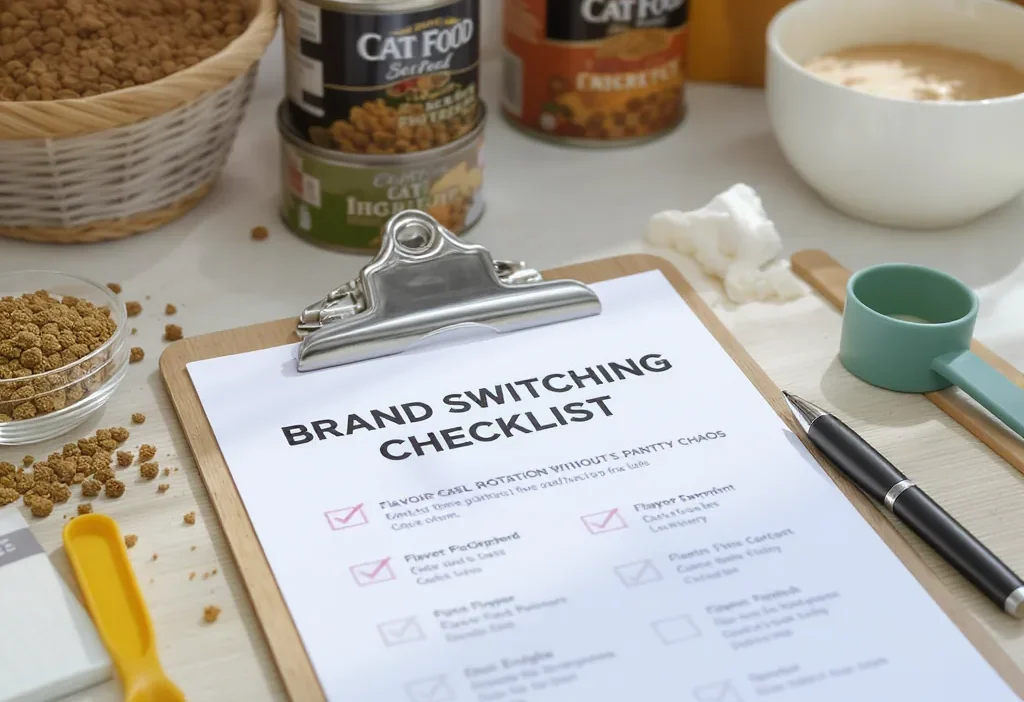
You open the pantry door, and a familiar wave of mild frustration hits. There’s the half-empty bag of the old brand your cat got bored with, a nearly-full pouch of a novel protein they sniffed and walked away from, and three different cans from a “variety pack” you optimistically bought last month. You want to offer your cat exciting flavor rotation or switch to a better brand for their health, but the fear of a finicky stomach and a kitchen cabinet that looks like a pet store clearance aisle holds you back. Sound familiar? You’re not alone in wanting to manage your cat’s diet without the digestive drama and pantry chaos. The good news is that a successful switching cat food brands checklist isn’t about luck—it’s about a calm, systematic approach. This guide provides exactly that: a practical, step-by-step plan to introduce new foods safely and keep your cat food inventory organized, turning anxiety into confident mealtime management.
To switch your cat’s food without digestive upset or pantry chaos, follow a slow transition over 7-10 days while meticulously tracking your inventory. Use a simple rotation system for new flavors to prevent future clutter and waste. This checklist approach minimizes the risk of stomach issues and ensures you use up old food efficiently, creating a smooth cat food brand transition plan.
Your Pre-Switch Pantry Audit (The Foundation)
Before you even look at a new bag of food, you need to know exactly what you’re working with. A quick pantry audit stops you from buying duplicates, helps you plan your transition timeline, and is the first step to managing cat food inventory effectively. Think of it as taking stock before a big project. food inventory effectively
Photo by Nennieinszweidrei on Pixabay
Here’s your mini-checklist:
- Take Everything Out. Pull every bag, can, and pouch of cat food from the cupboard, shelf, or bin. This gives you a clear visual of the chaos.
- Check Dates & Note Amounts. Look at the “best by” dates on each item. Then, estimate how much is left (e.g., “half a 5lb bag,” “three cans”). This tells you what needs to be used up first.
- Observe Your Cat’s Current Rate. How much of the current food does your cat eat per day? Knowing this helps you calculate how many days of old food you have left, which is critical for planning a smooth switch.
This audit creates your baseline. You’ll know if you have two weeks or two months of the old food to transition through, preventing last-minute scrambles and waste. Understanding your cat’s current nutritional intake is also a good moment to brush up on feline nutrition basics.
The Core Transition Protocol: Slow & Steady
This is the non-negotiable part. Whether you’re changing brands or just rotating cat food flavors within the same line, a gradual introduction is key to avoiding digestive upset like vomiting or diarrhea. Rushing this process is the number one mistake.
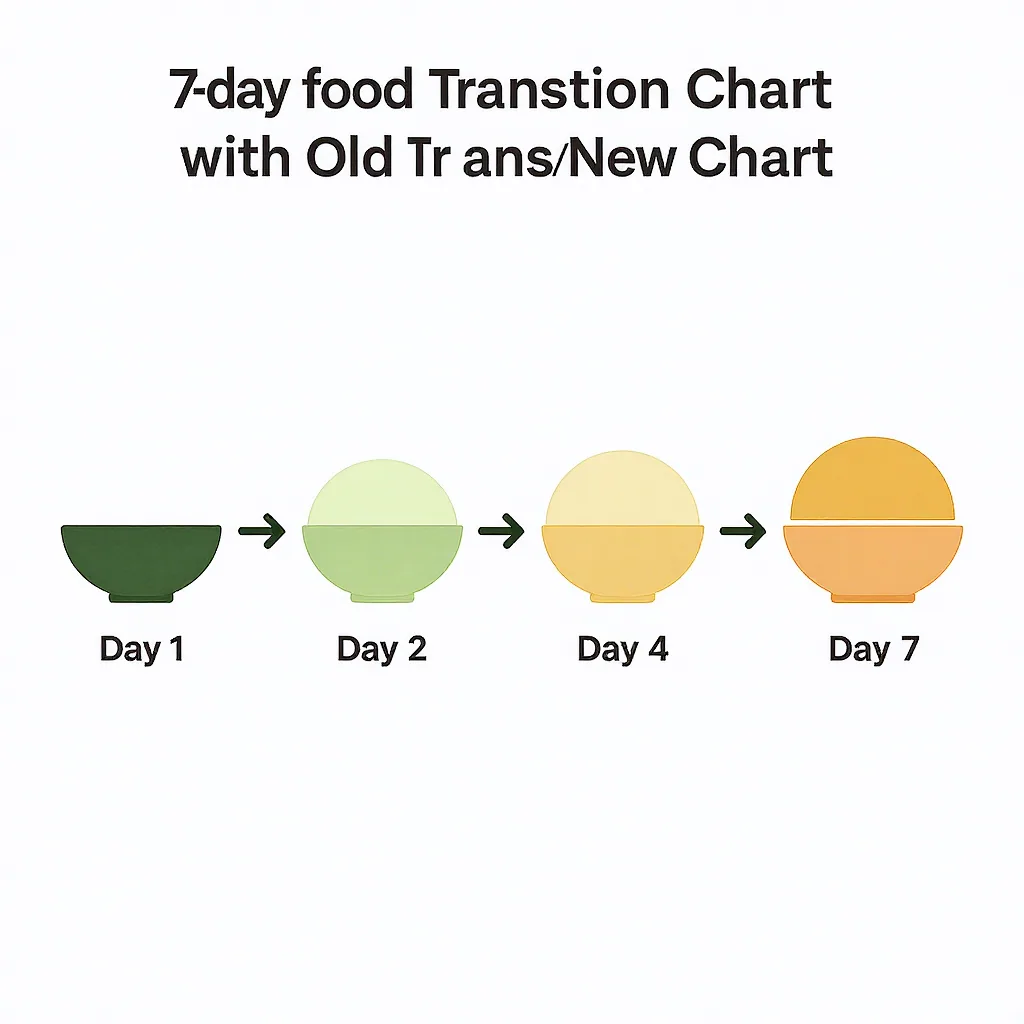
Follow this 7-day protocol for a cat food brand transition plan that’s easy on your cat’s stomach:
- Days 1 & 2: Mix 25% new food with 75% old food.
- Days 3 & 4: Move to a 50/50 blend.
- Days 5 & 6: Shift to 75% new food, 25% old.
- Day 7: Offer 100% of the new food.
If your cat has a known sensitive stomach, you can stretch this to 10-14 days. The golden rule is to watch your cat closely. If you see signs of intolerance (loose stool, lack of appetite), pause the transition, go back to the previous ratio for a couple more days, and then try progressing more slowly. This methodical how to switch cat food brands approach minimizes risk.
Building Your Rotation System (Post-Transition)
Once the switch is complete, how do you maintain variety without the pantry reverting to a jumbled mess? The goal is a sustainable system for rotating cat food flavors that your cat—and your storage space—can handle.
DO:
- Label bags with open dates. Use a marker to write the date you opened it. This makes “first in, first out” effortless.
- Use a simple sequencing rule. Finish one open bag or case completely before opening the next variety. This is the cornerstone of rotating cat food without waste.
- Designate a “next up” spot. Have one shelf or bin for the currently feeding food and one for the next flavor in line. This visual cue prevents random opening.
DON’T:
- Open multiple bags of different proteins at once. This leads to staleness and confusion.
- Buy in extreme bulk without a plan. A great sale is tempting, but ensure you can use the food well before its expiration date.
- Change proteins every single meal. Stick with one protein source for at least a few weeks to monitor for allergies or preferences.
Common Pitfalls & How to Sidestep Them
Even with the best checklist, it’s easy to slip up. Here are the most frequent mistakes in multi-brand cat feeding and how to avoid them.
Pitfall 1: Skipping the transition for “just a flavor.” Even a new flavor from the same brand can have a slightly different formulation or fat content that may upset your cat’s stomach. Solution: Always do a shortened transition (3-5 days) for any new product, even if it seems similar.
Pitfall 2: Letting the old food go stale. During a slow transition, the old food bag is open for over a week. Solution: Store all dry food in an airtight container, not the bag, to preserve freshness throughout the process.
Pitfall 3: Creating a confusing “buffet.” Offering too many choices at once can overwhelm a cat and make it harder to identify a problem ingredient. Solution: Implement your cat food rotation schedule one flavor at a time. Finish one, then transition to the next.
Pitfall 4: No backup plan for rejection. Sometimes, a cat simply turns up their nose at a new food. Solution: Always have a few cans or a small bag of a known, accepted food on hand. If the new food is rejected, you can revert to the old favorite without panic.
From Chaos to Confidence
Switching your cat’s food or introducing variety doesn’t have to be a source of stress or clutter. By taking a systematic approach—auditing first, transitioning slowly, and implementing a simple rotation system—you transform what feels like a daunting task into a series of manageable steps.
This method protects your cat’s digestive health, minimizes food waste, and ultimately brings a sense of order to your feeding routine. With this checklist in hand, pantry chaos becomes pantry peace, and your cat gets to enjoy safe, varied meals that keep mealtime interesting.