How much should I feed my cat? It’s a simple question that can feel surprisingly heavy, tangled up in our love and concern for our feline companions. We worry about underfeeding and overfeeding in equal measure, often left squinting at the vague guidelines on a food bag and hoping for the best. But the truth is, the perfect portion isn’t a universal cup measure or a guess—it’s a personalized equation. Getting it right comes down to understanding two core concepts: your cat’s unique daily calorie needs and a consistent method for measuring their food. This guide will walk you through the straightforward science and simple systems that take the guesswork out of cat feeding portions, helping you build a routine that supports their health and your peace of mind.
The right amount to feed your cat isn’t a universal cup measure, but a daily calorie target based on their ideal weight, life stage, and activity level. For most adult indoor cats, this falls between 20-30 calories per pound of body weight per day, which you can then translate into precise portions using a measuring cup or, for best accuracy, a kitchen scale. Consistency in measuring is just as important as the number itself to maintain a healthy weight.
The Science of Your Cat’s Calorie Needs
To move past guesswork, you need to understand the simple science behind feline energy requirements. It all starts with calories, not cupfuls. A calorie is a unit of energy, and your cat needs a specific amount each day to maintain a healthy weight—this is their Daily Energy Requirement (DER).

Photo by cottonbro studio on Pexels
The DER is calculated from a base number called the Resting Energy Requirement (RER)—the calories needed just to keep basic bodily functions running while at rest. Think of RER as the idle fuel consumption of a car. To get the full daily amount (DER), we multiply the RER by factors that account for your cat’s unique life.
The Key Factors in Your Cat’s Equation
Four main variables adjust that base calorie number up or down:
- Weight: This is the most critical number, specifically your cat’s ideal body weight. If your cat needs to gain or lose, you calculate calories for their target weight, not their current one.
- Life Stage: A growing kitten is a calorie-burning machine, while a senior cat often has a slower metabolism. Neutered or spayed adults also have different needs than intact ones.
- Activity Level: Does your cat sprint through the house at 3 a.m. or prefer a life of dignified lounging? An active cat needs more fuel.
- Health Status: Certain medical conditions, like hyperthyroidism or diabetes, can significantly alter calorie needs. Always consult your vet for a tailored plan if health is a factor veterinary nutrition.
Understanding this framework turns the question from “how much?” to “how much for my cat?” It’s the foundation of any reliable cat portion size guide.
Your Cat’s Personal Feeding Math
Let’s translate that science into a practical number you can use. You don’t need a degree in nutrition—just a calculator and honest assessment of your cat.
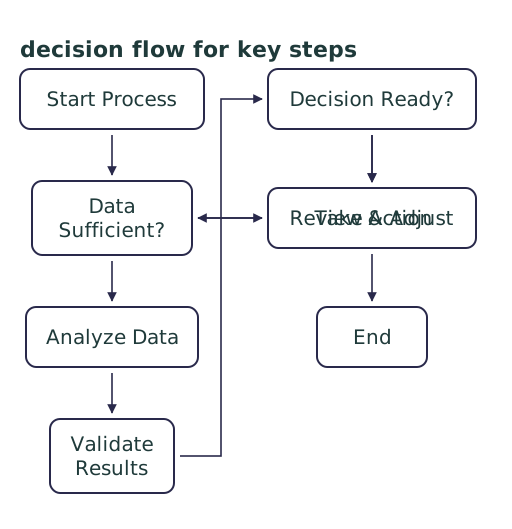
Here’s a simplified, step-by-step approach to find a solid starting point for your cat’s daily calories:
- Find the Ideal Weight: If your cat is at a healthy weight, use that. If unsure, your vet can help determine a target. For this example, let’s use a 10-pound cat with an ideal weight of 10 pounds.
- Apply a General Multiplier: For a typical, neutered, indoor adult cat, the daily need is often between 20-30 calories per pound of ideal body weight. A less active cat might be at the lower end (20-25 cal/lb), while a more playful one might be at the higher end (25-30 cal/lb).
- Do the Calculation: For our 10-pound cat with moderate activity: 10 lbs x 25 calories = 250 calories per day.
This 250 calories is your daily budget. It’s what you’ll divide into meals. Remember, this is a starting point. You’ll monitor your cat’s weight and condition and adjust up or down by about 10% as needed. This personalized number is far more reliable than the broad ranges on food packaging, which are designed to cover every possible cat.
Portioning Methods That Build Consistency
Now that you have a calorie target, how do you deliver it accurately every day? Consistency in cat feeding portions hinges on your measurement tool. Let’s compare the two main methods.
The Measuring Cup (The Convenient Choice)
Almost everyone has one. The pros are obvious: it’s fast and easy. The major con is inconsistency. Kibble size, shape, and how you scoop (scooped, poured, shaken down) can change the volume dramatically. A “cup” of large, airy kibble contains far fewer calories than a densely packed cup of small pieces.
If you use a cup: Use the same one every time, and use a consistent technique—lightly pour the food into the cup until it’s level, don’t scoop and pack it down.
The Kitchen Scale (The Gold Standard)
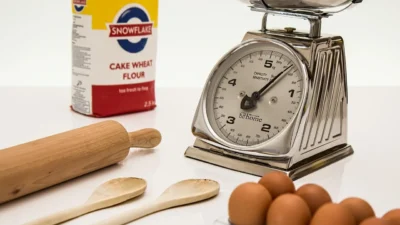
For true precision, nothing beats weighing food in grams. This method eliminates all the variables of volume. You know exactly how much mass of food you’re providing, and since calorie information on bags is given per gram or ounce, the math is flawless.
It sounds fussy, but it takes seconds: place the bowl on the scale, tare it to zero, and pour food until you hit the gram target for that meal. This is the single best way to ensure your calculated calorie budget is met, especially if your cat is on a weight management plan.
Whether you choose cups or a scale, pair your tool with a scheduled meal routine (e.g., breakfast and dinner) rather than free-feeding. This gives you control over the total daily intake and makes it easy to spot changes in appetite.
Common Portioning Pitfalls (And How to Avoid Them)
Even with the best intentions, small habits can derail your consistency. Here are the frequent missteps and how to correct them.
Eyeballing It & “Topping Off” the Bowl
Pouring a “little bit” into a half-full bowl because it looks low is a surefire way to accidentally overfeed. Solution: Commit to measuring the full portion for every meal, every time. Empty and wash the bowl between fillings if you must.
Forgetting the Treat Tax
Those tasty morsels are calories, too. If your cat gets several treats a day, they should ideally make up no more than 10% of their daily calorie budget. Solution: Subtract treat calories from the daily total before measuring out meals, or use bits of their regular kibble as “treats.”
Misjudging Activity Level
We often think our cats are more active than they are. A few short play sessions don’t equal the calorie burn of an outdoor hunter. Solution: Start with a conservative multiplier (like 20-25 cal/lb for indoor cats). It’s easier to add a few calories if weight drops than to deal with weight gain.
Using Volume for All Foods
Wet food and dry food have vastly different calorie densities. You cannot swap a cup of wet for a cup of dry. Solution: Always check the calorie content per can or per gram on the specific food’s label and calculate separately.
Putting It All Together: A Simple System
Feeling overwhelmed? Don’t be. Implementing a consistent routine is simpler than the theory behind it. Follow this mini-checklist to build your system.
- Calculate Your Number: Determine your cat’s daily calorie target based on ideal weight and lifestyle.
- Choose Your Tool: Decide on a measuring cup (used consistently) or, for best accuracy, a kitchen scale.
- Set a Schedule: Divide the daily total into 2-3 measured meals. Put the bowl down, and pick it up after 20-30 minutes.
- Monitor and Adjust: Weigh your cat monthly. If weight creeps up or down, adjust the daily portion by 5-10% and reassess in a few weeks.
This system removes the daily dilemma. You’re not deciding how much to feed; you’re simply executing a plan based on your cat’s needs. That’s the power of a consistent cat portion size guide—it gives you confidence and your cat stability.
Feeding with Confidence
Figuring out the right amount to feed your cat isn’t about finding a single, secret number. It’s about understanding the personalized equation that applies to your unique pet and then having a reliable method to deliver it day after day. By focusing on calories, using precise measurement, and avoiding common pitfalls, you transform feeding from a source of guesswork into a simple, consistent act of care.
This consistency is a profound kindness. It supports a healthy weight, stable energy, and long-term well-being. You now have the knowledge to move forward with confidence, providing not just food, but the right foundation for your cat’s health.
To establish consistent and healthy cat feeding portions, remember these core pillars: First, your cat’s needs are based on calories, determined by their ideal weight, age, and activity level—not the bag’s suggestion. Second, accuracy matters; use a dedicated measuring cup with a consistent technique or, for best results, a kitchen scale. Finally, build a routine with scheduled meals, account for all treats, and monitor your cat’s weight monthly to make gentle adjustments. This systematic approach removes the guesswork and supports your cat’s health through reliable, portion-controlled feeding.