You place the bowl down, and in a frantic blur of motion, your cat inhales its kibble. Sixty seconds later, the bowl is spotless, and your feline friend is back, pacing and meowing as if the meal never happened. This common scene isn’t just messy—it can lead to health issues like regurgitation, obesity, and boredom-driven mischief. The solution lies in enrichment feeding tools designed to slow the feast and engage the mind, but with options like slow feeders, lick mats, and snuffle mats, the choice can be confusing. This guide cuts through the clutter, helping you match the right tool to your cat’s unique personality and primary need, turning a problematic gulping session into a satisfying, stimulating experience.
The best way to choose between a slow feeder, lick mat, and snuffle mat for your cat is to match the tool to your cat’s primary need. Use a slow feeder bowl to physically slow down fast eaters and prevent regurgitation. Choose a lick mat to reduce anxiety, encourage calm licking, and manage portion control with wet food. Opt for a snuffle mat to satisfy natural foraging instincts and provide extended mental stimulation with dry food or treats.
The Science of Slowing Down: Why It Matters for Cats
If your cat finishes its meal in under a minute, you’re witnessing more than just enthusiasm. This rapid-fire eating can lead to several problems, from immediate physical discomfort to long-term behavioral issues. The core idea behind tools like slow feeders, lick mats, and snuffle mats is to turn a basic necessity into an engaging activity that supports your cat’s wellbeing.
From a health perspective, eating too quickly often causes regurgitation, as the stomach is overwhelmed. It can also contribute to weight gain, as the brain doesn’t have time to register fullness. More importantly, these tools address a critical aspect of cat enrichment feeding: mental stimulation. In the wild, cats would spend hours hunting and foraging. A bowl of food presented in seconds leaves a lot of instinctual energy unspent, which can manifest as boredom, stress, or even destructive behavior. Slow feeding for cats isn’t just about pace; it’s about providing a job that satisfies their natural instincts and reduces anxiety.
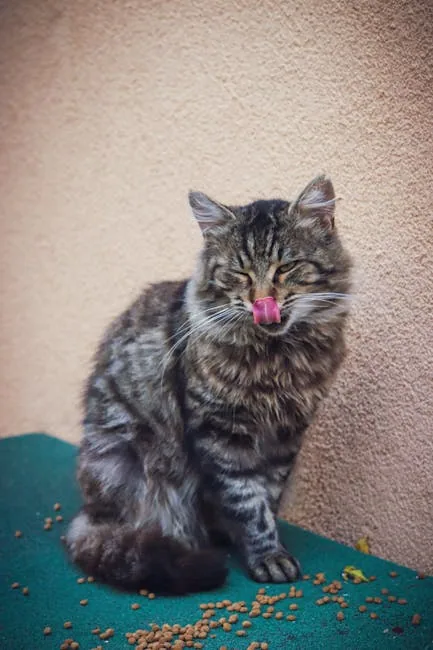
Photo by Gizem Gökce on Pexels
Slow Feeders: The Bowl-Based Solution
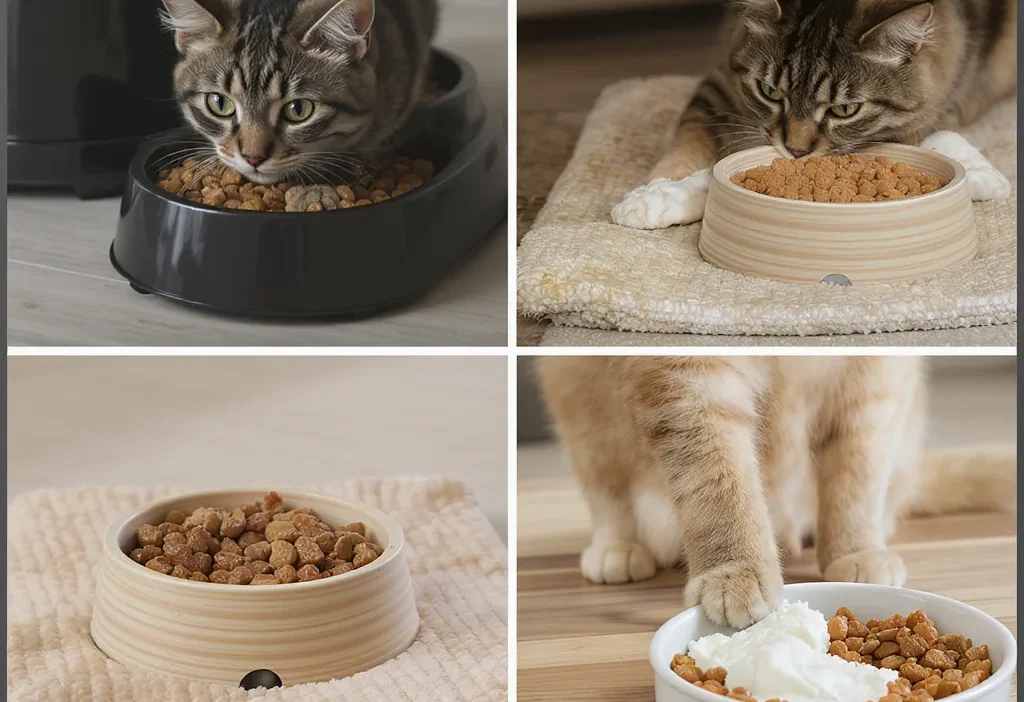
A cat slow feeder bowl is exactly what it sounds like: a bowl designed with physical barriers like ridges, pillars, or maze-like channels. Its primary goal is straightforward—to physically slow your cat’s eating pace by making them work around the obstacles to get each piece of kibble. This is the most direct tool for combating gulping.
This tool is best for the cat who vacuums up dry food and is at risk of regurgitation. It’s a practical choice for everyday meals. However, some cats may become frustrated if the maze is too challenging, and these bowls can be trickier to clean than a standard dish. It’s important to note that while it slows eating, a slow feeder is more about physical regulation than deep mental enrichment. For that, you’d look to the other options in the slow feeder vs lick mat vs snuffle mat for cats comparison.
| Tool | Primary Goal | Best For (Cat Behavior) | Ideal Food Type | Cleaning Difficulty | Key Consideration |
|---|---|---|---|---|---|
| Slow Feeder | Physically slow eating pace | Fast eaters, gulpers | Dry kibble | Medium (can trap food) | May frustrate less persistent cats |
| Lick Mat | Encourage calm, prolonged licking | Anxious cats, portion control | Wet food, purees, paste treats | Medium (textured surface) | Not suitable for dry food |
| Snuffle Mat | Simulate natural foraging behavior | Curious, bored, or high-energy cats | Dry kibble, small treats | High (fabric, hand-wash) | Not for messy/wet food; some cats may chew fabric |
Lick Mats: For Calm and Controlled Consumption
A lick mat is a flat, typically silicone mat covered in various textures like nubs or grooves. You spread a soft food—like wet food, puree, or yogurt—over its surface. The core function is to encourage slow, rhythmic licking. This action is inherently calming for cats and can be a powerful tool for managing anxiety.
The lick mat benefits are behavioral. It’s excellent for cats who are stressed during vet visits, car rides, or when left alone. It’s also fantastic for portion control with calorie-dense wet foods or for administering medications hidden in a paste. Because it relies on licking, it’s not for dry food. Cleaning requires a good scrub to get food out of the textures, but many are dishwasher safe.
Snuffle Mats: Tapping Into the Foraging Instinct
A snuffle mat for cats is a fabric mat made of many long, soft strands (often fleece). You hide pieces of dry kibble or small treats within the folds and strands. Your cat then uses its nose and paws to “forage” and hunt for the food, mimicking the search aspect of natural hunting behavior.
This is the most enrichment-focused tool of the three. It provides extended mental stimulation and physical activity, making it ideal for indoor cats who show signs of boredom or have lots of energy to burn. It turns a two-minute meal into a ten-minute brain game. The key considerations are that it’s not suitable for wet food, can be difficult to clean, and you’ll need to supervise cats who are prone to chewing on fabric. The right snuffle mat for feline foraging can be a game-changer for a curious cat’s routine.
Choosing the Right Tool: A Side-by-Side Guide
The table above provides a clear snapshot, but how do you apply it? The best approach is to match the tool to your cat’s most pressing need or personality trait. Don’t overthink it—start with the most obvious symptom.
Is your cat’s main issue that they eat so fast they get sick? A cat slow feeder bowl is your first line of defense. Do they seem anxious or need help with a specific stressful event? A lick mat is likely your best bet. Is their primary problem boredom, excess energy, or a lack of engaging activity? A snuffle mat for cats is designed to address that exact need. Some cats will enjoy and benefit from a mix of tools—using a slow feeder for meals and a snuffle mat for treat-dispensing play. The choice isn’t permanent; observe how your cat responds. A tool that causes frustration isn’t enriching, so be willing to switch tactics. For the most comprehensive approach to feline wellbeing, many experts recommend incorporating a variety of food puzzles for cats into their routine feline behaviorists.
Finding Your Cat’s Perfect Match
Whether you choose a slow feeder, lick mat, or snuffle mat, you’re taking a positive step toward your cat’s physical and mental health. These tools are more than just feeding accessories; they’re simple ways to enrich your cat’s daily life and prevent common issues stemming from boredom and fast eating.
The most effective strategy is to start with one tool that aligns with your cat’s clearest need. Watch how they interact with it. Do they engage with curiosity or walk away in frustration? Their reaction is your best guide. There’s no single “best” option for every cat—the winner is the tool that your cat enjoys and that brings a little more peace and engagement into their world.