You’re standing in the pet food aisle, phone in hand, surrounded by a dizzying wall of bags and cans. Each one promises a shinier coat, more playful energy, or a longer life for your cat. The sheer volume of options—kibble, pate, gravy lovers, grain-free, raw—is enough to make any caring owner feel quietly overwhelmed. The truth is, the quest for the single “best” cat food is a recipe for frustration. How to choose cat food types isn’t about finding a mythical perfect product; it’s a practical exercise in navigating the real-world constraints of your budget, your cat’s unique quirks, and your own lifestyle to build a balanced, sustainable feeding plan. This guide will help you move past the marketing noise and create a strategy that keeps your cat healthy and happy, without the aisle-induced anxiety.
The best way to choose cat food types is to first understand your cat’s core needs and your own practical constraints, then build a balanced plan—often a mix of wet and dry food—that prioritizes hydration and quality ingredients within your means. There’s no one-size-fits-all answer, but by considering your cat’s age, health, and your budget, you can make a confident, informed choice that works for your unique situation.
The Real Choice Isn’t Dry vs. Wet
Let’s reframe the entire conversation. Standing in the aisle debating dry vs wet cat food is like trying to choose between a refrigerator and a stove for your kitchen—you likely need both to create complete, satisfying meals. The real task isn’t picking a single “perfect” product. It’s about building a flexible, complete nutritional strategy that works for your specific cat and fits seamlessly into your real life.
This “constraints-first” approach means you start by acknowledging the non-negotiable truths: your cat’s need for hydration, their unique health profile, and their personal quirks. Then, you layer in your practical realities like budget, storage, and schedule. The goal is a balanced plan, not a mythical one-size-fits-all bag or can. By shifting your mindset from a single choice to a strategic framework, the overwhelming wall of options becomes a manageable toolkit.
Your Cat’s Non-Negotiables: Age, Health & Hydration
Before you consider a single brand, you must understand your cat’s fundamental needs. These factors aren’t preferences; they’re the blueprint for picking the right cat food.
Life Stage Dictates Diet
Kittens need dense calories and specific nutrients for growth, typically found in food formulated for “all life stages” or “kitten.” Adults require maintenance diets to stay lean and healthy. Seniors often benefit from easier-to-digest formulas with adjusted protein and phosphorus levels, especially as kidney function can decline. Always choose a food that matches your cat’s life stage as stated on the label.
The Hydration Imperative
This is the single most critical point in the dry vs. wet debate. Cats have a low natural thirst drive, evolving from desert animals who got most moisture from prey. Dry food is only about 10% water, while wet food is 70-80%. Relying solely on kibble can leave cats in a chronic state of mild dehydration, which over years is a significant risk factor for urinary tract diseases and kidney stress. Incorporating wet food is the easiest way to boost their total water intake dramatically.
Health Conditions as Guides
Specific issues directly inform food type. Cats with kidney disease or a history of urinary crystals often require increased moisture and controlled mineral levels, making wet or prescription wet food a cornerstone of management. Diabetic cats benefit from high-protein, low-carbohydrate diets, which are easier to find in wet food formulas. For obese cats, satiety is key; the high water and protein content of wet food can help them feel fuller on fewer calories. Important: This information is educational. Always work with your veterinarian to diagnose conditions and choose therapeutic diets.
Your Practical Constraints: Budget, Time & Fussy Eaters
Your cat’s needs set the direction, but your real-world constraints determine the path. Validating these factors is essential—ignoring them leads to a plan that won’t last.
The Budget Reality
Cost is a legitimate and primary concern. While wet food is often more expensive per can, you must consider cost per calorie and cost per nutrient. A high-quality dry food may be more calorie-dense, so you feed less, while a budget wet food might be full of fillers. The most sustainable approach is often a mix: using a quality dry food as a base (cost-effective, convenient) and adding wet food as a hydration booster within your weekly grocery budget.
Lifestyle & Logistics
Do you travel frequently? An automatic feeder with dry food might be necessary. Live in a small apartment? Storing fifty cans is different from storing one bag. Have multiple cats with different diets? You’ll need a feeding strategy to keep them separate. Dry food offers convenience and long shelf life, while wet food requires daily serving and refrigeration of leftovers.
The Fussy Feline
Perhaps the most common constraint is a cat who turns up their nose at anything new. This is where the balanced framework shines. You’re not locked into one type. If your cat adores a particular kibble, that’s your base. The challenge becomes finding a complementary wet food—even just a teaspoon as a daily “topper”—that they’ll tolerate. It might require patience and testing different textures (pâté vs. chunks in gravy) and proteins. The experience of slowly introducing a novel wet food alongside their trusted kibble, celebrating the tiny licks before a full meal, is the real work of selecting cat food.
Cat Food Types Decoded: A Side-by-Side Look
With needs and constraints in mind, here’s a clear breakdown of the primary formats. This isn’t about “good vs. bad,” but understanding each tool’s role in your kit.
| Food Type | Primary Benefits | Key Drawbacks | Best Suited For | Approx. Cost Per Meal |
|---|---|---|---|---|
| Dry Food (Kibble) | Convenient, cost-effective, long shelf life, can support dental health via mechanical scraping (though not a substitute for brushing). | Low moisture content, often higher in carbohydrates, can be less palatable for some cats. | Free-feeding (with care), multi-cat households, tight budgets, as a base diet. | Low |
| Wet Food (Canned/Pouched) | High moisture content, typically higher in protein/lower in carbs, highly palatable, precise portion control. | More expensive per calorie, requires refrigeration once opened, shorter shelf life. | Cats needing hydration boost (kidney, urinary issues), picky eaters, weight management, as a meal or topper. | Medium to High |
| Raw (Commercial) | Mimics a “natural” prey diet, high in moisture and protein, minimal processing. | Risk of bacterial contamination (for pet and human), requires careful handling/storage, nutritionally incomplete if not balanced properly, expensive. | Owners committed to handling protocols and consulting a veterinary nutritionist veterinary nutritionist. | High |
| Freeze-Dried/Dehydrated | Lightweight, long shelf life, retains more nutrients than kibble, can be fed dry or rehydrated. | Very expensive, can be high in calories if fed dry, rehydration is necessary for moisture benefit. | Travel, food toppers, or as a rehydrated primary diet for owners seeking a less processed option. | High |
| Prescription Diets | Formulated to clinically manage specific health conditions (renal, urinary, diabetic, etc.). | Must be prescribed by a vet, often expensive, palatability can vary. | Cats with diagnosed medical conditions requiring nutritional management. | High |
The Balanced Feeding Framework: A Step-by-Step Guide
Here is your actionable, 10-step framework for moving from overwhelm to a confident plan. Think of it as a cycle, not a linear path.
- Assess Your Cat: Note their age, weight, activity level, and any known health issues. A vet check-up is the best starting point.
- Identify Your Constraints: Honestly evaluate your monthly pet food budget, storage space, schedule, and your cat’s known preferences.
- Set a Hydration Goal: Decide what percentage of your cat’s diet will come from wet food. Even 25-30% provides a meaningful moisture boost.
- Choose a Primary Base: Based on steps 1-3, select a high-quality dry or wet food that will form the consistent foundation of their diet.
- Select a Complement: Choose the other format (e.g., a wet food topper if dry is base) to meet your hydration goal and add variety.
- Decode the Labels: Read the guaranteed analysis and ingredient list of your finalists (more on this next).
- Make a Trial Purchase: Buy the smallest available size of your chosen foods to test palatability and tolerance.
- Transition Slowly: Over 7-10 days, gradually mix the new food with the old to avoid digestive upset.
- Establish a Routine: Set consistent meal times and measured portions to manage weight and monitor intake.
- Monitor and Adjust: Watch your cat’s energy, coat, litter box habits, and weight. Be prepared to tweak the plan.
Quick Signs You’re On the Right Track
- Consistent, firm litter box deposits.
- A soft, shiny coat with minimal shedding.
- Steady, healthy weight and good muscle tone.
- Consistent energy levels for play and rest.
- Eager anticipation at mealtimes.
Reading the Bag & Can: Beyond the Marketing
Packaging is designed to sell. The label is where you find facts. Learning to read it is your superpower for choosing between dry and wet cat food wisely.
Guaranteed Analysis & Dry Matter Basis
The “Guaranteed Analysis” lists minimum percentages of crude protein and fat, and maximum percentages of fiber and moisture. Crucial insight: wet food’s numbers look lower because they include all that water. To compare wet and dry food accurately, you must convert them to a “dry matter basis,” a calculation that removes water content. Many online calculators can do this, revealing that a wet food often has more protein per dry ounce than kibble.
The Ingredient List Hierarchy
Ingredients are listed by weight before processing. Look for a named animal protein (e.g., “chicken,” “salmon”) as the first ingredient. Be wary of vague terms like “meat by-products” or excessive listings of grains and starches early on. Terms like “natural” or “holistic” are marketing buzzwords with no legal definition in pet food, unlike the “complete and balanced” claim which refers to meeting AAFCO nutrient profiles AAFCO nutrient profiles.
Understanding “Grain-Free” & Special Claims
“Grain-free” doesn’t mean low-carbohydrate; it often means the carbs come from sources like peas, lentils, or potatoes. This became a popular trend, but it’s not inherently better for all cats. Choose a diet based on your cat’s specific needs, not the latest marketing term. If a diet makes a health claim (e.g., “supports urinary health”), look for evidence it follows WSAVA guidelines WSAVA guidelines or has undergone feeding trials.
Common Pitfalls & How to Sidestep Them
Even with the best intentions, it’s easy to stumble. Here’s how to avoid common mistakes when picking the right cat food.
The Free-Feeding Kibble Trap
Pitfall: Leaving a bowl of dry food out all day for convenience. Sidestep: This often leads to overeating and weight gain. Switch to measured, timed meals—even for dry food—to control intake.
Equating Price with Quality
Pitfall: Assuming the most expensive option is always best. Sidestep: A mid-priced food that meets AAFCO standards for your cat’s life stage and uses quality ingredients is better than a boutique food with pretty packaging but questionable nutritional balance.
The Abrupt Switch
Pitfall: Changing foods overnight, causing digestive revolt (vomiting, diarrhea). Sidestep: Always use the slow transition method over at least a week, mixing increasing amounts of the new food with the old.
Myth: Dry Food Cleans Teeth
Pitfall: Relying on kibble alone for dental health. Sidestep: While some kibble is designed for dental care, it’s no substitute for regular tooth brushing or veterinary dental cleanings. Think of it as a minor helper, not a solution.
The “One-Size-Fits-All” Assumption
Pitfall: Feeding all your cats the same thing because it’s easier. Sidestep: A kitten, a senior, and an obese cat have different needs. Separate feeding, even with different foods, is essential for their long-term health.
Making the Transition & Monitoring Success
You’ve chosen a plan. Now, implement it smoothly and learn how to read your cat’s signals to know if it’s working.
The Slow Introduction Schedule
Patience prevents problems. Over 7-10 days, mix the foods in these approximate ratios: Days 1-2: 75% old / 25% new. Days 3-4: 50% / 50%. Days 5-7: 25% old / 75% new. Day 8+: 100% new. If at any point your cat refuses the mix or has soft stools, slow down and spend more time at the previous ratio.
What “Success” Really Looks Like
Success isn’t just your cat eating the food. It’s the downstream effects:
- Coat & Skin: A soft, shiny coat with minimal dander.
- Energy & Demeanor: Consistent, appropriate playfulness and calm rest.
- Litter Box: Well-formed stools and normal urine clumps (indicating good hydration).
- Weight: Maintaining a stable, healthy weight you can confirm with vet visits or at-home scales.
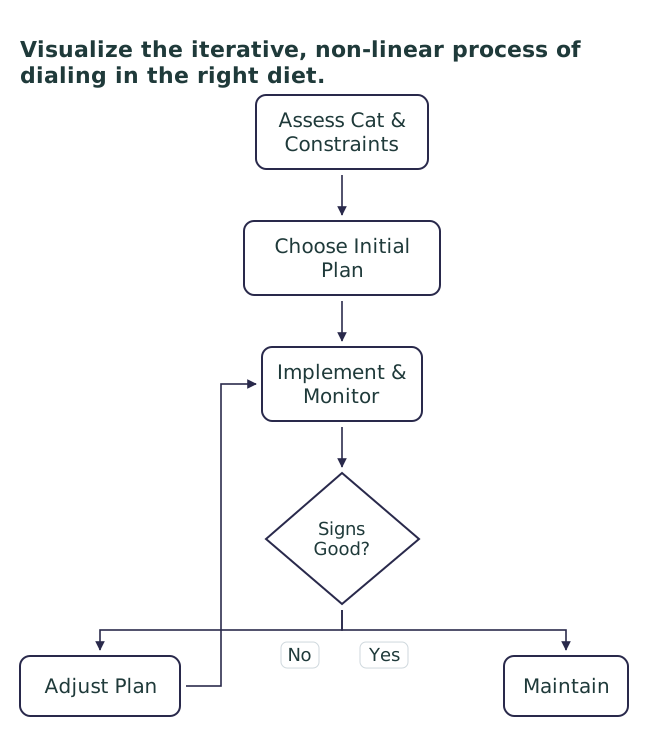
This process is iterative. If after a month you’re not seeing positive signs, it’s not a failure—it’s data. Re-evaluate. Maybe the protein source doesn’t agree with them, or the calorie count is off. Adjust one variable at a time (e.g., try a different protein in the wet topper) and continue the cycle of monitoring. This flexible, observant approach is the heart of a sustainable, healthy cat feeding guide.
Your Cat’s Diet, Your Confident Choice
You now have something far more valuable than a brand recommendation: a framework. Choosing cat food isn’t a one-time test you pass or fail; it’s an ongoing conversation between your cat’s needs and your life’s realities. The goal was never perfection, but a practical, balanced plan that supports a vibrant, hydrated, and content cat within the world you actually live in.
Remember, adjustments are part of the process, not a sign you got it wrong. As your cat ages, your budget shifts, or new products emerge, you can return to this constraints-first thinking. Trust your observations, partner with your vet, and know that the very act of carefully considering these choices means you’re already providing excellent care. Now, you can walk down that aisle not with overwhelm, but with purpose.
The Core Takeaways: Choosing the right cat food types is a strategic balancing act. Prioritize your cat’s hydration needs, often by incorporating wet food. Align the food format with their life stage and any health considerations. Work honestly within your practical constraints like budget and lifestyle. Use label-reading skills to cut through marketing and identify quality protein sources. Finally, implement changes slowly and monitor your cat’s response—energy, coat, litter box habits, and weight are your best guides to success.
Q: Is dry food bad for cats?
A: Dry food isn’t inherently “bad,” but an exclusive dry food diet can contribute to chronic low-level dehydration due to its low moisture content. For many cats, especially those prone to urinary issues, this is a risk. Dry food is best used as part of a mixed feeding plan or for cats who drink water very well, ensuring they get adequate total moisture from all sources.
Q: Can I feed my cat only wet food?
A: Yes, a nutritionally complete and balanced wet food diet is an excellent choice for many cats. It provides optimal hydration and is often higher in protein. The main considerations are cost, the need for more frequent feeding (as it’s less calorie-dense per volume), and ensuring your cat’s teeth are cared for through other means, as wet food doesn’t provide any abrasive cleaning action.
Q: How much does it cost to feed a cat a high-quality diet?
A: Costs vary widely. A mixed feeding plan with a quality dry food and mid-range wet food can typically range from $40 to $80 per month for one cat. Exclusive premium wet or raw diets can exceed $100 monthly. The best strategy is to define “high-quality
For a practical walkthrough, see Treats & Food Safety.