You’re standing in the pet food aisle, staring at a wall of cans and pouches, utterly paralyzed. Pâté, chunks in gravy, shreds in sauce—your cat’s future meal depends on this choice, and the pressure is real. It’s a universal struggle for cat owners: decoding the cryptic world of wet cat food textures to find the one your finicky feline will actually deign to eat. This isn’t just about pickiness; the right texture can support your cat’s dental health, hydration, and overall ease of eating. This guide will help you cut through the confusion of pate vs chunks vs shreds cat food, turning an overwhelming decision into a simple matchmaking process between your cat’s unique needs and the perfect plate.
The best way to choose between pate vs chunks vs shreds cat food is to consider your cat’s age, dental health, and eating style. Pâté is smooth and easy to eat for kittens, seniors, or cats with dental issues. Chunks in gravy provide more texture and hydration, while shreds offer a meaty, flaky consistency that mimics prey. Observe your cat’s reactions to find their match.
Texture Decoded: What Pâté, Chunks, and Shreds Really Mean
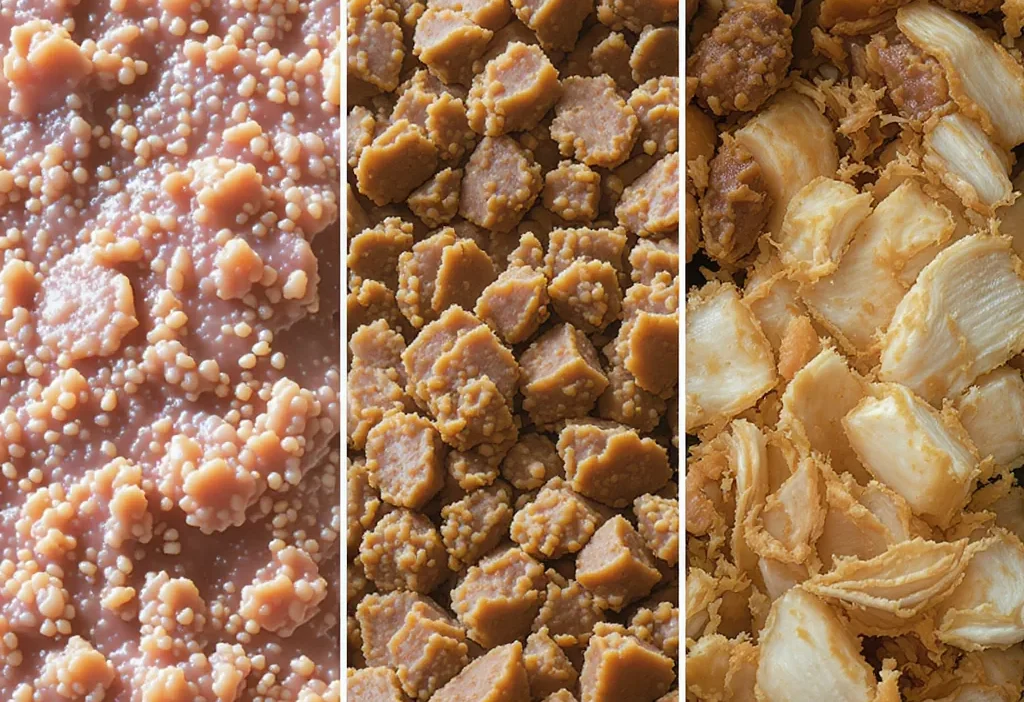
Before you can match a texture to your cat, you need to know what you’re looking at. These labels are useful guides, but they aren’t strict industry definitions, so there can be variation between brands. Here’s what you can generally expect.
Pâté: This is a smooth, uniform paste, similar to a thick mousse or paté for humans. It’s created by finely grinding and emulsifying ingredients, resulting in a consistent texture with no distinct pieces. For many cats, this reads as “easy baby food”—it requires minimal chewing, which can be a pro or a con.
Chunks (in Gravy or Jelly): This texture features bite-sized, cubed pieces of meat or fish suspended in a liquid. The “gravy” is typically a flavored sauce, while “jelly” is a more gelatinous broth. The appeal here is in the combination: the liquid provides hydration and flavor, while the chunks offer a satisfying, meaty bite.
Shreds (in Sauce): Imagine pulled pork or flaked tuna. Shreds are thin, irregular strips of meat in a lighter sauce or broth. This texture often looks the most like “real” cooked meat to our eyes and may mimic the flaky consistency of prey, which can trigger a strong instinctual response in some cats.
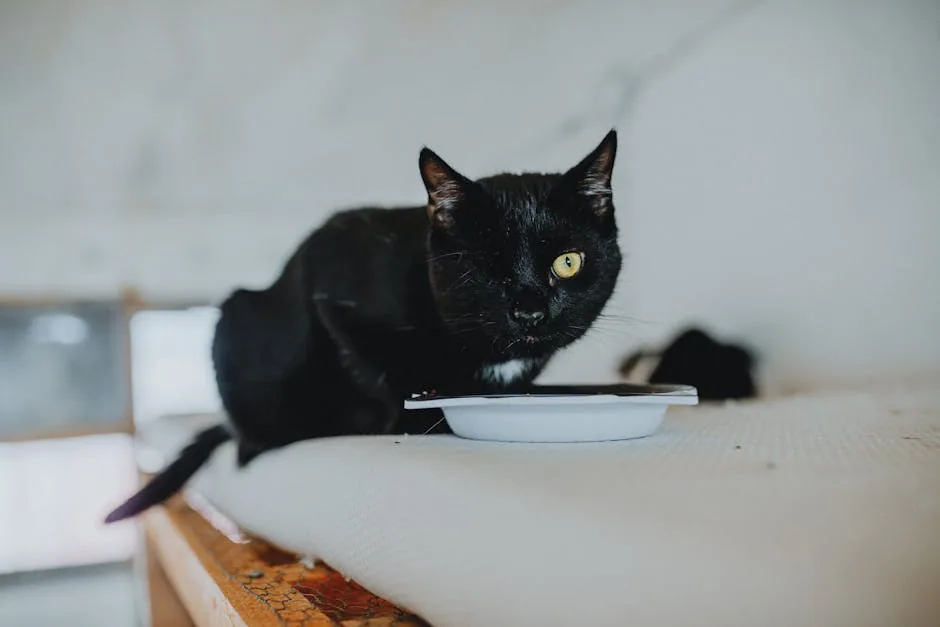
Photo by Helena Jankovičová Kováčová on Pexels
Remember, texture labels are guides, not guarantees. The size of “chunks” or the thickness of “shreds” can vary, so observing your cat’s reaction is key.
The Cat Factor: Matching Texture to Your Feline
The “best” wet food texture for cats isn’t universal; it’s the one that aligns with your individual cat’s needs and quirks. Think about these factors to start narrowing down the choice.
Age and Dental Health
Kittens and seniors, or cats with dental issues, missing teeth, or gum sensitivity, often do best with the easiest-to-eat option: pâté. It requires no chewing. Chunks and shreds demand more dental work, which can be painful or impossible for cats with oral health problems. If you suspect dental issues, a veterinary check is the first step dental health.
Eating Style and Hydration
Is your cat a “gulper” who barely chews? Pâté or finely shredded options might prevent choking. A playful eater who bats at food might engage more with distinct pieces like chunks. For cats that need encouragement to drink more, the high moisture content in gravy or sauce-based chunks and shreds can be a significant hydration boost.
Here’s a quick-scan table to compare the three main textures side-by-side across key practical criteria:
| Criteria | Pâté | Chunks in Gravy | Shreds in Sauce |
|---|---|---|---|
| Best For | Kittens, seniors, cats with dental issues, easy medication mixing. | Adult cats who enjoy texture, cats needing extra hydration, picky eaters who lick gravy. | Cats who prefer a meaty, flaky consistency, playful eaters, often high palatability. |
| Ease of Eating | Very Easy (no chewing needed) | Moderate (requires some chewing) | Easy to Moderate (flakes apart easily) |
| Hydration Level | Moderate (moist but no free liquid) | High (plenty of gravy to consume) | Moderate to High (depends on sauce amount) |
| Mess Factor | Low (sticks to bowl) | Medium (gravy can splatter) | Low to Medium |
| Mixing with Meds | Excellent (easily conceals powders/pastes) | Fair (can hide in gravy, may not stick to chunks) | Fair to Good (can hide in sauce) |
Beyond Preference: Practical Pros and Cons
Your cat’s preference is paramount, but your own lifestyle plays a role too. Each texture comes with trade-offs that affect your daily routine.
Pâté is often the most calorie-dense by volume, which is useful for weight gain or feeding small portions. It’s famously easy to mix medications into. The downside? It can stick stubbornly to the bowl and some cats find its uniform texture boring over time.
Chunks in Gravy are great for hydration and often very palatable, but that gravy can end up everywhere—on walls, floors, and whiskers. It can also separate in the can, and picky cats might only lick the gravy, leaving the nutritious solids behind.
Shreds offer a satisfying, natural mouthfeel many cats love, and they are usually less messy than gravy-heavy options. However, they can be more expensive, and the shred size can vary wildly by brand. They also don’t always work well in puzzle feeders compared to uniform pâté or kibble.
Your Texture Transition Roadmap
Ready to test your cat’s cat food texture preference? A strategic approach prevents waste and frustration.
Do’s for Testing Textures
DO the Side-by-Side Test: Offer a teaspoon of two different textures (e.g., pâté vs. shreds) in separate, identical bowls. Place them side-by-side and see which one your cat goes for first or finishes completely. This is the clearest indicator.
DO Use the “Mix-In” Method for Switching: If you’re changing textures or brands, mix a small amount of the new food with the old. Gradually increase the proportion of the new over 7-10 days to avoid digestive upset.
DO Observe the Details: Did they lick only the gravy? Nudge chunks out of the bowl? Eat around certain pieces? These are all clues to their true preference.
Don’ts to Avoid Common Pitfalls
DON’T Force a Texture: If your cat consistently walks away from a specific texture, respect that. Forcing it can create food aversion.
DON’T Assume One Brand Defines All: A rejection of one brand’s “shreds” doesn’t mean they hate all shredded food. The recipe, sauce, and shred size matter. Try another brand before ruling out a texture entirely.
DON’T Make Rapid, Multiple Changes: Switching textures and proteins and brands all at once confuses your cat and your detective work. Change one variable at a time.
Finding Your Cat’s Perfect Match
Choosing between pâté, chunks, and shreds isn’t about finding the objectively “best” wet food texture for cats. It’s about matching a texture to the unique combination of your cat’s health, instincts, and quirks—and your own practical needs. The goal is a simple, stress-free feeding routine that results in a happily eating, well-hydrated cat. Stay observant, be patient with the process, and remember that the perfect match is the one that gets eaten with gusto.
Q: My cat only licks the gravy and leaves the chunks/shreds. What should I do?
A: This is common. First, try mashing the solids with a fork to mix them more thoroughly with the gravy. If that fails, the texture of the solid pieces might be unappealing. You can try a different brand with softer or smaller pieces, or consider switching to a pâté, which combines everything into one consistent bite.
Q: Is pâté or chunks better for a cat with no teeth?
A: Pâté is almost always the better choice for a toothless cat. Its smooth, paste-like consistency requires no chewing at all, making it easy and comfortable to eat. Chunks or shreds, even in gravy, would be difficult to manage without teeth to break them down.
Q: Can I mix different textures together?
A: Absolutely! Mixing textures can be a great way to add variety and encourage eating. For example, adding a spoonful of shreds into a pâté can provide new interest. Just introduce any new texture gradually to ensure it doesn’t cause an upset stomach.
Q: My kitten loves pâté but my adult cat prefers shreds. Do I need to buy two different foods?
A: Possibly, and that’s perfectly okay. Kittens have different nutritional needs for growth, so they should eat a food formulated specifically for kittens. If your adult cat’s shredded food is labeled for “all life stages,” it might be suitable for the kitten, but always check with your vet. It’s common and practical to have separate foods if their texture and life-stage needs differ.