You’re scooping the food, and suddenly, your cat is a whirlwind of paws and plaintive meows, weaving between your ankles or launching a sneak attack on your slippers. This pre-dinner frenzy isn’t just bad manners—it’s a deep-seated instinct screaming to be satisfied. In the wild, a cat’s life follows a simple, powerful sequence: hunt, catch, eat, groom, sleep. Our indoor companions still carry this biological blueprint, but with the ‘hunt’ removed, all that pent-up energy often gets redirected into behaviors we find frustrating. The good news? You can work with this instinct, not against it. By introducing a short, structured play routine before meals for cats, you can transform that chaotic dinner-time energy into a constructive ritual. This simple act of pre-meal play for cats simulates the natural cycle, leading to a calmer, more satisfied feline and a more peaceful moment for you both to enjoy.
A quick, structured play routine before meals mimics your cat’s natural hunt-catch-eat cycle, using their energy constructively and leading to a more relaxed, satisfied cat after eating. By engaging in just five minutes of interactive play with a wand toy, you satisfy their primal instincts, which can dramatically reduce food-related anxiety, prevent attention-seeking behaviors, and curb the infamous post-meal “zoomies.” It’s a simple, effective strategy that enriches your cat’s day and strengthens your bond.
Why Play Before Food is a Game-Changer
Your cat isn’t being “needy” or “annoying” when they pester you for food. They’re following a hardwired biological script. In the wild, cats follow a strict sequence: hunt, catch, kill, eat, groom, sleep. By offering a bowl of kibble without the preceding effort, we’re serving dessert without the main course. This missed step can lead to pent-up energy, food-related anxiety, and those infamous midnight zoomies.
A short pre-meal play for cats acts as a hunting simulation before feeding. It channels their natural energy into a constructive outlet, satisfying the instinctual “work” required for a meal. The result? A cat that eats more calmly, is more likely to rest contentedly afterward, and is less prone to attention-seeking or destructive behaviors. It’s a simple way to work with their nature, not against it, for better cat energy management.
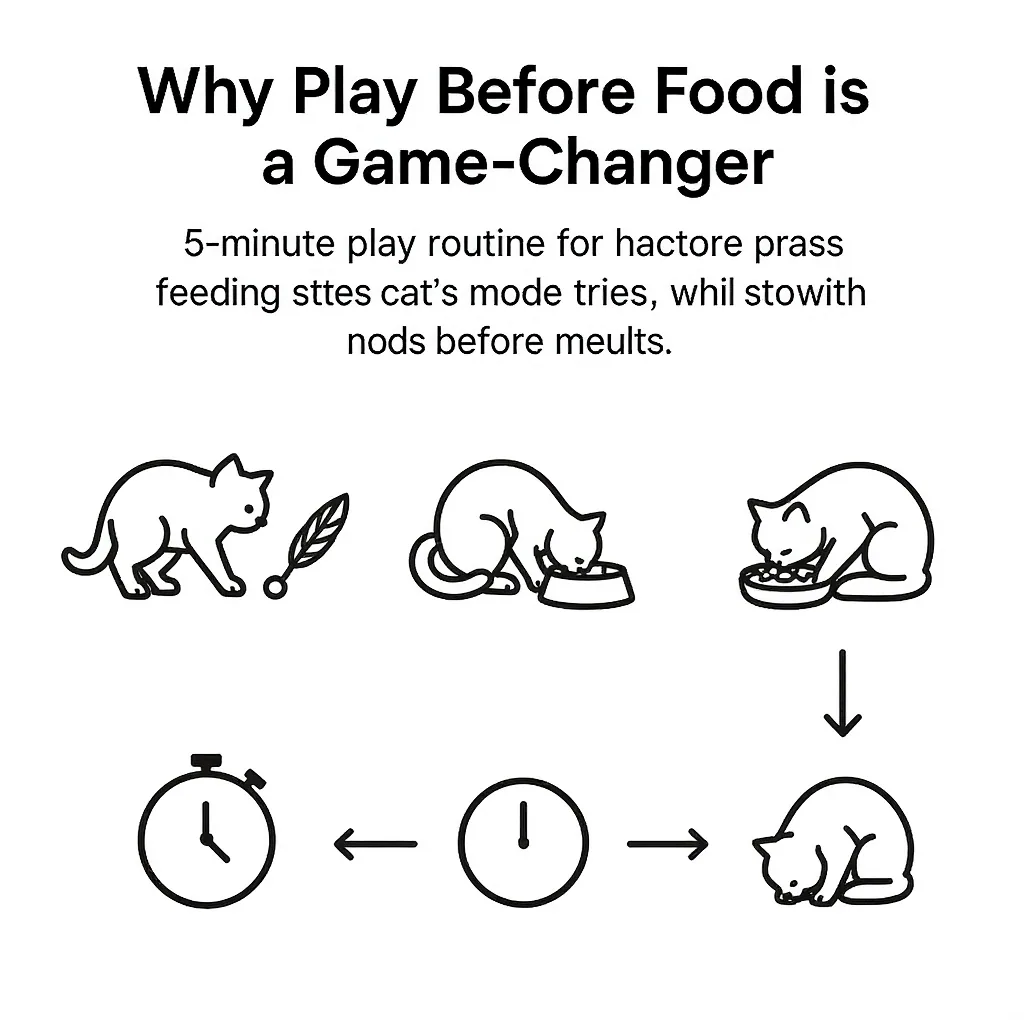
The 5-Minute Pre-Meal Play Protocol
This routine is designed to mimic the natural hunt-catch-eat cycle in a condensed, predictable format. Consistency is key—aim to do this before every main meal.
Photo by Ksenia Chernaya on Pexels
Phase 1: Choose Your Tool (0-30 seconds)
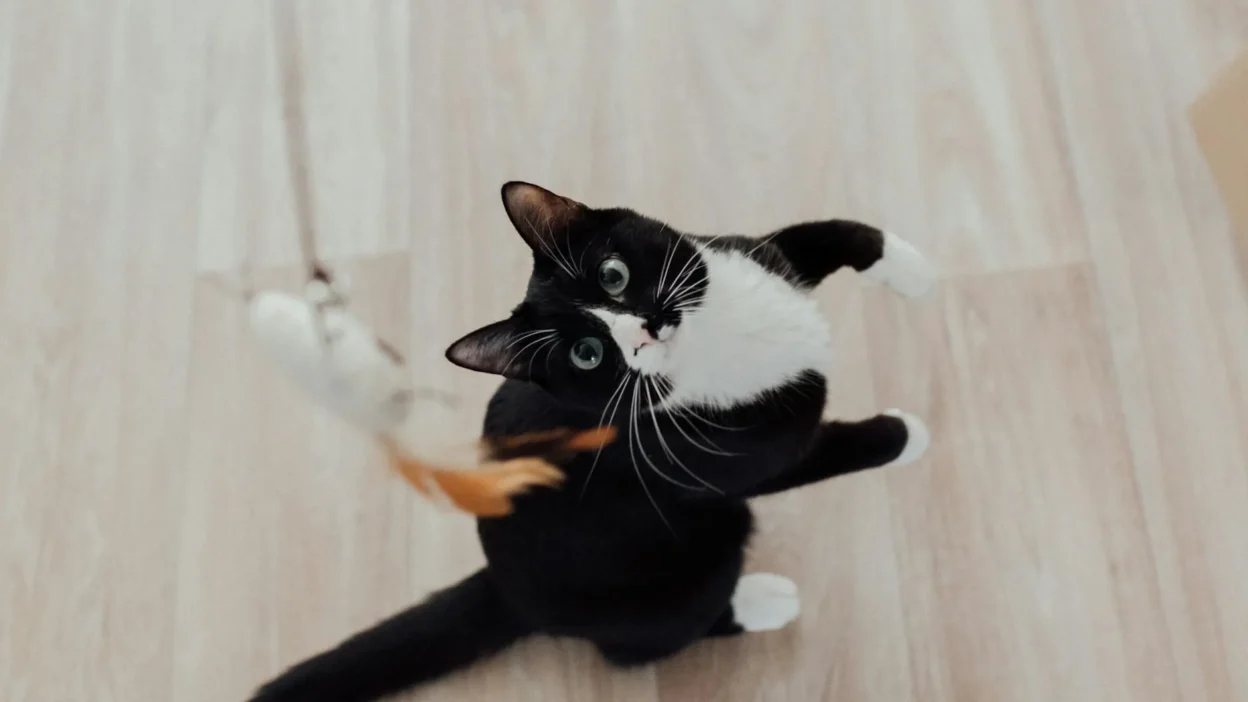
Grab a wand toy with a feather or fleece attachment. This keeps your hands at a safe distance and allows for the most realistic prey-like movements. Avoid laser pointers for this routine, as they provide no physical “catch” and can lead to frustration.
Phase 2: Initiate the Hunt (2-3 minutes)
Make the toy behave like prey. Drag it erratically along the floor, behind furniture, and up onto cat trees. Use short, quick bursts of movement followed by pauses to trigger your cat’s stalking instinct. Let them watch and track it. The goal here is to get them moving and engaged.
Phase 3: The Big Catch (1-2 minutes)
This is the most crucial part. After building excitement, slow the toy down and let your cat successfully pounce on and “capture” it. Allow them to grab it with their paws, bite it, and wrestle with it for a few seconds. This provides the critical satisfaction of a successful hunt.
Phase 4: The Wind-Down & Reward (30-60 seconds)
Gently take the toy and put it away. Then, immediately place their food bowl down. This direct connection—catch, then eat—completes the cycle. Your cat will now associate the energetic play with the calm reward of food, leading to a more settled state. This entire cat play schedule is a powerful form of meal-time enrichment for cats.
Tailoring the Routine: Scenarios for Different Cats
The core protocol is adaptable. Here’s how to tweak it for common feline personalities.
For the Senior or Less Mobile Cat
Focus on low-impact play. Drag the toy slowly on the floor right in front of them, or dangle it from a chair so they can bat at it without much movement. The “catch” is still vital—let them grab it easily. Even a short, gentle session can stimulate their mind and appetite.
For the Hyperactive Kitten or High-Energy Cat
They may need a more vigorous 2-3 minute “hunt” phase. Use faster movements and encourage jumps. Ensure they get several “catches” during the session to fully drain that boundless energy. This quick cat play before eating is essential for managing their exuberance.
For the “Lazy” or Food-Motivated Cat
Use the food itself as motivation. Hold the food bowl in one hand and the wand in the other. Make them follow the toy a short distance to “earn” their meal. Start with very short distances and gradually increase. This builds the association that play leads directly to food.
For Multi-Cat Households
If possible, engage each cat in a brief individual session before group feeding. If time is tight, use one wand toy but ensure each cat gets a clear, separate “catch” moment before you put the food bowls down. This prevents competition and ensures each feline completes their hunt cycle. Managing a cat play schedule for multiple cats might mean rotating who goes first each meal.
Common Pitfalls to Avoid
Small missteps can undermine your routine. Here’s what to watch for.
Do: Use a wand toy to keep hands safe. Don’t: Use your fingers or hands as toys. This teaches cats that human limbs are prey, leading to painful bites and scratches feline behavior.
Do: Always end with a successful “catch.” Don’t: Put the toy away mid-pounce or use a laser pointer without a physical finale. This leaves your cat frustrated and the cycle incomplete.
Do: Keep sessions short and energetic. Don’t: Play for too long until your cat is panting or exhausted. Five minutes of focused play is more effective than twenty minutes of half-hearted chasing.
Do: Put the food bowl down immediately after play. Don’t: Make your cat wait or do another chore in between. The link between the catch and the meal should be instant.
Here’s a common experience: You have a great session, your cat makes a final pounce, and you, thinking playtime is over, simply put the wand on the table and walk away to get the food. Your cat, still buzzing from the hunt, may start racing around or meowing because the ritual wasn’t properly closed. That immediate transition from toy to bowl is the final, satisfying period in the sentence.
Building a Calmer Routine, One Meal at a Time
Transforming your cat’s behavior doesn’t require hours of effort—it’s about strategic, consistent moments. By dedicating just five minutes before meals to this hunt-catch-eat simulation, you’re speaking your cat’s native language. You’ll likely notice a shift from frantic begging to anticipatory play, and from restless energy to post-meal contentment.
Start small tonight. Before your cat’s next dinner, grab that wand toy and run through the protocol. The goal isn’t perfection, but practice. Over time, this simple pre-dinner play routine becomes a cherished part of your shared day, strengthening your bond and nurturing your cat’s innate well-being.