Ask a group of cat owners about the best way to feed their pets, and you’ll likely spark a debate. Many assume that the “right” answer is a strict schedule, while others swear by the simplicity of leaving food out all day. But what if the real choice isn’t about what’s universally better for cats, but what works best for your lifestyle and your cat’s unique personality? The decision between free-feeding and scheduled meals is less about finding a perfect rule and more about navigating two distinct paths—one that’s often beginner-friendly but carries hidden risks, and another that requires more engagement but offers greater control. Understanding the pros, cons, and practical middle ground is key to promoting your cat’s health and your household’s harmony.
The best way to choose between free-feeding and scheduled meals for your cat is to assess your lifestyle and your cat’s personality. Free-feeding (leaving food out all day) can work for cats who self-regulate, but often leads to overeating. Scheduled meals provide structure, help with weight management, and strengthen your bond, but require more time. Most cats thrive on a hybrid approach, like timed meals with a measured daily portion.
What Free-Feeding Really Means (And Who It’s For)
Free-feeding, also known as ad libitum feeding, is the practice of leaving a bowl of food out for your cat to graze on throughout the day and night. It’s most commonly done with dry kibble, as it doesn’t spoil quickly. While it might seem like “unlimited food,” it’s better understood as a specific management style that puts the cat in charge of its own meal timing.
This method isn’t for every cat, but it can work well in specific scenarios. The ideal candidate for free-feeding is a cat who naturally self-regulates—the one who takes a few bites and walks away, returning only when genuinely hungry. It’s often a simpler fit for single-cat homes where there’s no competition for the food bowl. For owners with unpredictable schedules, it can provide peace of mind that their cat won’t go hungry.
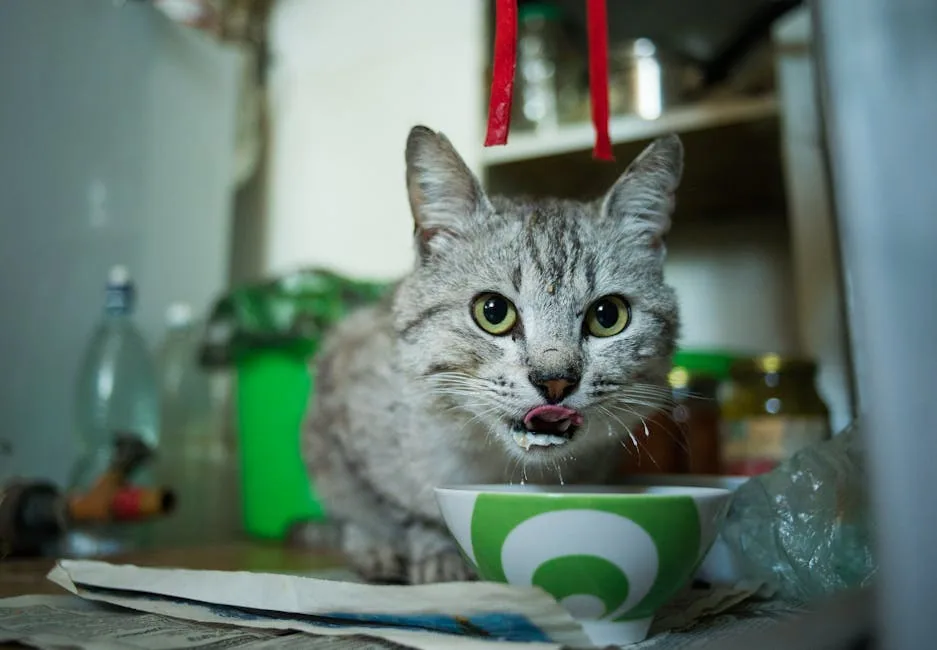
Photo by Angelina Zhang on Pexels
It’s crucial to note that free-feeding wet food is generally not recommended, as it can spoil and become a health risk within hours. The primary challenge with this approach is that many cats lack an “off switch,” which can quietly lead to weight gain over time, making the free feeding cats pros cons a critical consideration.
The Scheduled Meal Path: Structure and Benefits
Scheduled feeding for cats involves offering measured portions at specific times each day, typically two to four meals. This approach transforms feeding from a passive resource into an active, structured event. It’s the path for the engaged owner who wants more control and insight into their cat’s health and habits.
The benefits are substantial. First and foremost, it enables precise portion control, which is the cornerstone of weight management and cat obesity prevention. You know exactly how much your cat eats each day. Second, it allows you to monitor appetite closely; a missed meal can be an early warning sign of illness. Third, meal times become bonding rituals, reinforcing your relationship. Finally, in multi-cat households, it ensures each cat gets their specific diet and prevents food bullying.
Tools like automatic cat feeders can help maintain this schedule, dispensing meals even when you’re not home. This method requires more daily effort and planning but offers greater oversight and can curb problematic behaviors like constant begging or nighttime activity.
Side-by-Side: Key Differences at a Glance
To help visualize the core choice in free-feeding vs scheduled meals for cats, here’s a breakdown of how these methods compare across key categories.
| Category | Free-Feeding | Scheduled Meals |
|---|---|---|
| Core Concept | Food available 24/7; cat grazes at will. | Measured portions given at set times. |
| Pros | Convenient; suits erratic schedules; reduces anxiety for some cats. | Portion control; monitors health; strengthens bond; manages multi-cat homes. |
| Cons | Risk of overeating/obesity; hard to monitor intake; food can stale. | Requires daily time/planning; cat may beg between meals. |
| Best For (Cat) | The natural grazer who self-regulates; single cat. | Food-motivated cats; multi-cat homes; cats needing weight management. |
| Best For (Owner) | Busy, unpredictable lifestyle; beginner seeking simplicity. | Structured routine; owner wanting active health management. |
| Potential Tools | Simple bowl. | Measuring cup, automatic feeder, puzzle toys. |
Finding Your Cat’s Middle Ground
For many cats and owners, a hybrid approach offers the best of both worlds. This middle ground provides structure without rigidity and can be adapted to your unique situation. The goal is to meet your cat’s natural instincts while maintaining healthy boundaries.
Hybrid Method 1: Timed Meals with a Measured Daily Portion
This is the most common and effective compromise. You determine your cat’s total daily calorie needs (consult your vet) and split that amount into two or three scheduled meals. This maintains portion control for cats while creating predictable routines. An automatic feeder can handle one of these meals if you’re away.
Hybrid Method 2: Scheduled Wet Food, Available Dry Food
Some owners provide a scheduled wet food meal in the morning and evening for hydration and bonding, while leaving out a measured amount of dry kibble for grazing during the day. This requires careful calculation to avoid overfeeding but can satisfy both the cat’s desire to nibble and the owner’s need for control.
The right choice depends on key decision points: your cat’s age, current weight, any health issues like diabetes, the dynamics of a multi-cat home, and your own work schedule. Observing your cat’s behavior is the best guide cat behavior observation.
Your Decision Checklist: Lifestyle & Cat Personality
Cut through the noise by asking yourself these practical questions. Your honest answers will point you toward the most sustainable method for your household.
- Your Lifestyle: Do you work from home or have a consistent daily routine? Or is your schedule highly variable?
- Your Cat’s Appetite: Is your cat a dainty grazer who leaves food in the bowl, or does they devour anything in sight the moment it’s served?
- Multi-Cat Dynamics: Do you have multiple cats? Is one a dominant eater who bullies the others away from a shared bowl?
- Health & Weight: Is your cat at a healthy weight, or are you actively trying to manage weight gain or a medical condition?
- Behavioral Signs: Does your cat meow incessantly or wake you up for food? Or are they calm and patient around mealtimes?
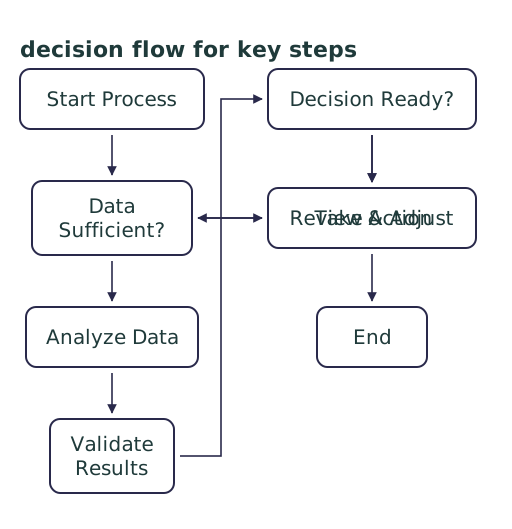
The Right Choice for Your Unique Team
The debate between free-feeding and scheduled meals isn’t about finding a universal “winner.” It’s about identifying the system that supports a healthy cat and a harmonious home. The ideal cat feeding schedule is one you can maintain consistently and that keeps your cat at a healthy weight and in good spirits.
Remember, no choice is set in stone. Start with the method that best aligns with your checklist, observe your cat’s response for a few weeks, and don’t hesitate to adjust. The ultimate goal isn’t perfection, but a happy, well-nourished companion and a less stressful daily life for you both.
Q: Can I free-feed wet food?
A: It’s not recommended. Wet food spoils quickly at room temperature, becoming a breeding ground for bacteria within a few hours. For your cat’s health, offer wet food at scheduled meal times and discard any uneaten portion after 20-30 minutes.
Q: How many scheduled meals should my cat have per day?
A: Most adult cats thrive on two meals per day (morning and evening). Kittens, seniors, or cats with certain medical conditions may need three or more smaller meals. Your veterinarian can provide the best personalized advice based on your cat’s age, health, and energy needs.
Q: My cat begs for food constantly—what should I do?
A: Constant begging is often a sign of a routine issue. Transitioning to scheduled meals can help immensely, as your cat learns food comes at predictable times. Ensure the portion is adequate, and never reward begging with food or treats—instead, engage them with play or attention away from the kitchen.
Q: Is an automatic feeder considered free-feeding or scheduled?
A: An automatic feeder is a tool for scheduled feeding. It delivers a measured portion at a pre-set time, creating structure even when you’re not home. It doesn’t leave food out continuously for grazing, so it helps with portion control and can break the association of you being the sole food source.
Further reading: Measuring portions.