If you’ve ever watched your cat take a few polite laps from their water bowl and walk away, you’re not alone. Many cats are chronically under-hydrated, a quiet issue that can lead to serious health risks like urinary tract problems and kidney disease. The frustration of trying to coax a cat to drink more is real, but the solution might be simpler than you think. Instead of fighting their natural instincts, you can work with them. Using wet food for cat hydration is a straightforward, effective strategy that seamlessly adds vital moisture to their daily meals, aligning with their biological preference to get water from their food.
The best way to use wet food for cat hydration is to make it a regular part of their diet. Start by gradually replacing a portion of their dry kibble with a high-quality canned food. You can further boost moisture by adding a little warm water or low-sodium broth to create a gravy, and always serve it at room temperature to enhance aroma and appeal. This method leverages a cat’s natural preference to get water from food, seamlessly increasing their daily fluid intake.
Why Cats Struggle with Hydration (And Why Wet Food Works)
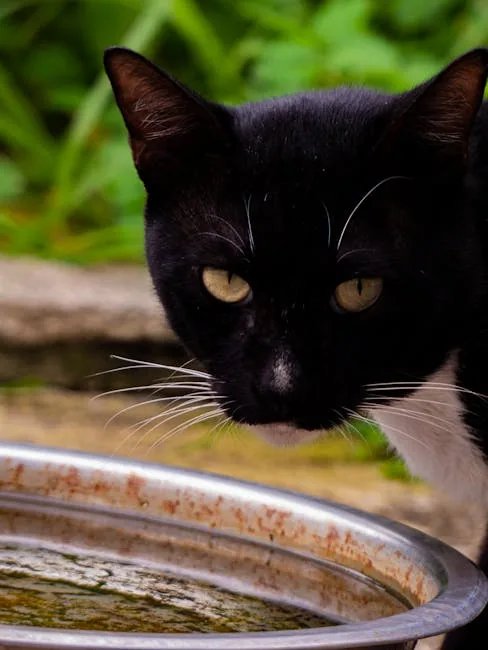
Photo by xian dazonem on Pexels
Cats are descendants of desert-dwelling ancestors, which means their bodies evolved to get most of their necessary water from their prey. This left them with a relatively low thirst drive. While a bowl of fresh water is essential, many cats simply don’t drink enough to compensate for a dry diet.
This is where the moisture content of their food becomes critical. Dry kibble typically contains only about 10% water. In contrast, high moisture cat food like canned or pouched wet food is around 70-80% water. By feeding wet food, you’re working with your cat’s natural physiology, allowing them to ingest water as they eat—just as they would in the wild. This is a fundamental way to add moisture to a cat diet seamlessly.
This alignment isn’t just convenient; it supports vital health. Adequate hydration is crucial for kidney function and helps prevent urinary tract issues, a common concern for indoor cats feline urinary health. Making wet food a regular part of their meals directly addresses their low thirst drive at its source.
Your Simple Wet Food Hydration Protocol
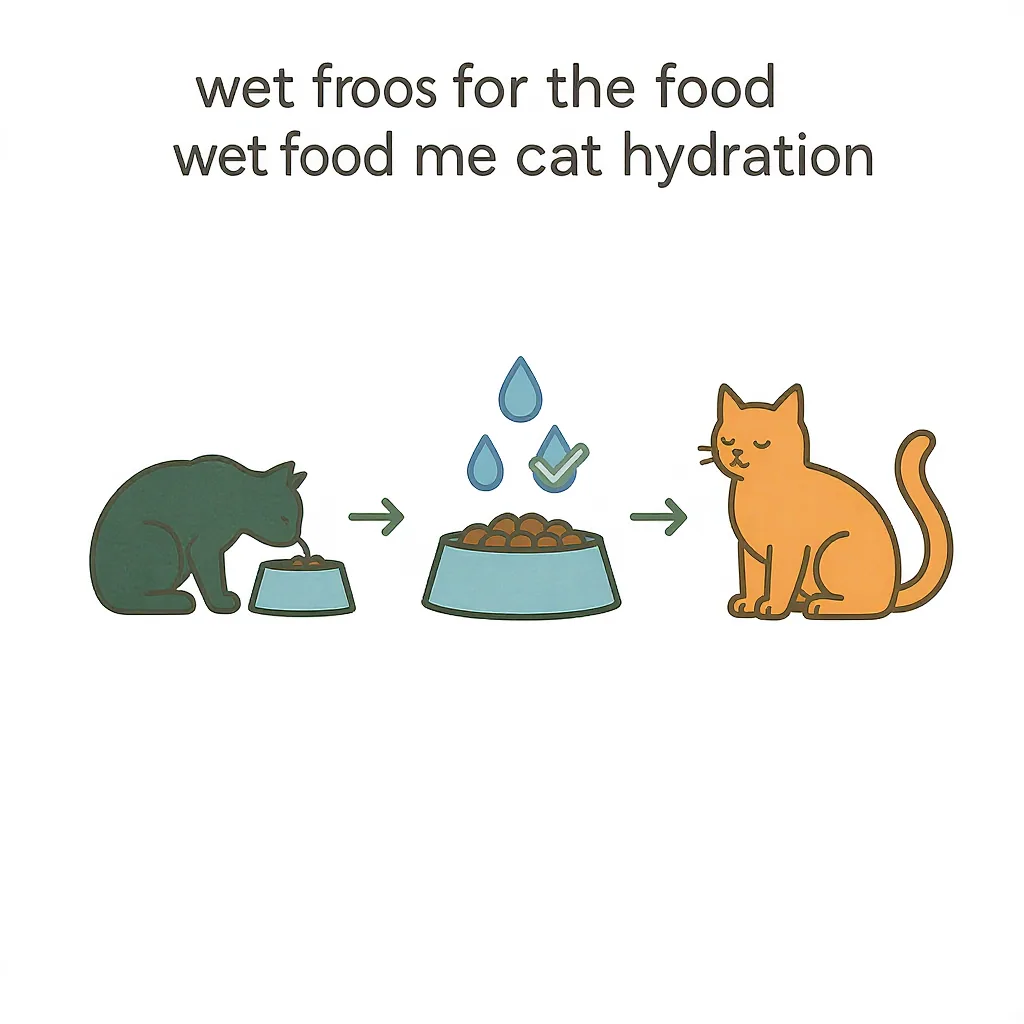
Turning wet food into a hydration tool is straightforward. Follow this practical protocol to increase your cat’s daily fluid intake without stress.
Step 1: Choose the Right Food
Start with a high-protein wet food that lists a real meat source as the first ingredient. While any wet food adds water, quality matters for overall nutrition. Avoid gravies or sauces with thickeners as the primary ingredient.
Step 2: Start Small & Mix Gradually
Do: Begin by offering a teaspoon of wet food alongside their usual kibble, or mix a tiny amount into it. This allows them to get accustomed to the new smell and texture.
Don’t: Replace their entire meal suddenly, as this can cause digestive upset or a hunger strike.
Step 3: Slowly Increase the Ratio
Over 7-10 days, gradually increase the portion of wet food while decreasing the dry kibble. The goal is to reach a point where at least one of their daily meals is primarily wet food.
Step 4: Boost Moisture (The Easy Upgrade)
Once your cat is happily eating wet food, you can amplify its hydrating power. Stir in a tablespoon of warm water or a bit of low-sodium chicken broth. This creates a tempting gravy that encourages lapping and significantly boosts total water intake.
Step 5: Serve It Right
Always serve wet food at room temperature. Cold food from the fridge has a muted aroma, which is less appealing to cats. Let it sit out for 15-20 minutes or warm it briefly in a dish of hot water.
Step 6: Maintain a Schedule
Consistency helps. Offer moistened meals at the same times each day and remove uneaten food after 20-30 minutes to ensure freshness and food safety.
Common Hydration Boosting Mistakes to Avoid
Even with the best intentions, a few missteps can undermine your efforts. Here’s what to watch for.
Don’t change foods too abruptly. A sudden switch can lead to refusal or an upset stomach.
Do instead: Follow the gradual transition outlined in the protocol above.
Don’t turn the meal into soup. Adding too much water at once can create an unappealing, diluted puddle your cat will ignore.
Do instead: Start with just a spoonful of warm water mixed in thoroughly.
Don’t leave wet food out all day. It spoils quickly, becoming a bacterial risk and losing its appeal.
Do instead: Practice scheduled, portioned feedings.
Don’t rely solely on fish flavors. While many cats love fish, an exclusive diet can lead to pickiness or nutrient imbalances.
Do instead: Rotate through a few protein sources like poultry, rabbit, or beef.
Don’t assume all wet foods are equal. Some are higher in carbohydrates or fillers than others.
Do instead: Read labels and look for foods with named meat meals and minimal by-products.
Scenario: Tailoring the Approach for Your Cat
The basic protocol works for most, but sometimes you need a slight adjustment. Here’s how to adapt.
For the Picky Eater
If your cat snubs the new offering, focus on texture and temperature. Try a pâté instead of chunks in gravy, or vice-versa. Warming the food is non-negotiable here. You can also use a tiny bit of wet food as a “topper” on their dry kibble to spark interest.
For Cats on Prescription Diets
Never stop a prescribed diet without veterinary advice. However, many therapeutic diets come in both dry and wet forms. Ask your vet if a hydrating cat food version of their prescription is available, which would allow you to follow the same moisture-boosting principles.
For Multi-Cat Households
When one cat needs a special diet or more water, separate feeding is key. Use different rooms or microchip-activated feeders to ensure each cat eats only their portion. This prevents food bullying and allows for tailored hydration strategies.
For Weight Management
Wet food can be a great ally here, as it’s often less calorie-dense than dry food for the same volume. Work with your vet to calculate the correct portion of a high-protein, high-moisture food to help your cat feel fuller while staying hydrated.
Making Hydration Effortless
Using wet food to boost your cat’s hydration is a powerful, natural strategy that aligns with their biology. The tradeoff is straightforward: while it requires a bit more daily management than free-feeding kibble—in terms of cost, storage, and a feeding schedule—the potential benefits for your cat’s long-term kidney and urinary tract health are significant.
View it as a worthwhile investment in their well-being. You don’t need to overhaul everything overnight. Start with one small, moistened meal and observe the positive change. Often, the easiest solution is the one that works with your cat’s instincts, not against them.
Q: Can I just add water to my cat’s dry food instead?
A: You can, but it’s less effective and often less appealing. Dry food is designed to absorb water, turning it into a soggy, mushy texture many cats dislike. It also doesn’t increase the moisture content nearly as much as starting with a food that’s already 70-80% water. Wet food is a more reliable and palatable method.
Q: How much wet food should I feed for hydration?
A: There’s no single amount, as it depends on your cat’s size, age, and overall diet. A good starting point is to replace one of their daily dry meals with a comparable calorie portion of wet food. Your veterinarian can provide the most precise feeding recommendation based on your cat’s specific needs.
Q: Is wet food enough, or does my cat still need a water bowl?
A: Yes, always provide fresh, clean water in a bowl (or a cat fountain, which many prefer). Wet food significantly increases their total water intake, but a separate water source is still essential for when they do feel thirsty and for overall environmental enrichment.
Q: My cat only likes one flavor. Is that okay?
A: In the short term, it’s fine if it ensures they eat and get hydrated. However, relying on a single flavor or protein source long-term can sometimes lead to nutritional gaps or increase the risk of developing a food allergy. If possible, try to slowly introduce at least one other flavor into a rotation to provide variety and balance.